STEM Integration Through Project-Based Learning (PBL)

Ross, M. & Rae, N. (2026). STEM Integration Through Project-Based Learning (PBL).

Follow the workbook in order, or decide where to begin based on your schools’ needs:

  • Need a shared understanding of what high quality PBL looks like? Use Tool #1: Building Shared Foundations
  • Feeling unprepared to design and facilitate PBL experiences? Use Tool #2: Building Capacity
  • Need help turning an isolated PBL effort to a sustainable schoolwide model? Use Tool #3: Building a Collaborative Ecosystem
  • Need help planning a STEM integrated PBL? Use Tool #4: Building an Integrated Plan

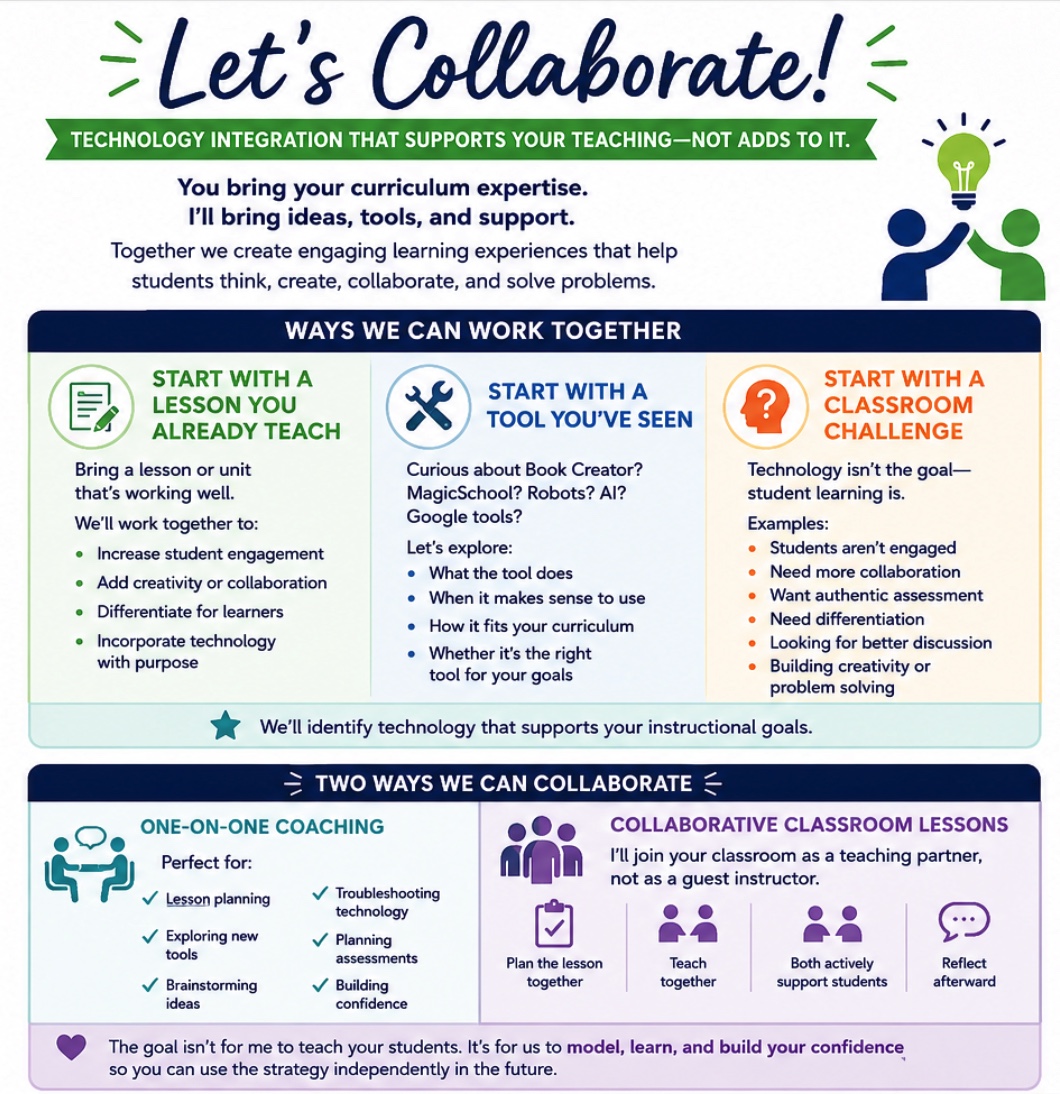
Teacher Brief: Collaborating for Effective Technology Integration

Lescault, T. & Codding, D. (2026). Collaborating for Effective Technology Integration.

Technology integration is most effective when it is purposeful, collaborative, and connected to student learning goals. Collaboration between teachers and instructional technology specialists, coaches, librarians, curriculum leaders, and colleagues can help educators identify meaningful ways to use technology that enhance learning rather than simply adding another tool to the classroom. This brief aims to achieve the following:

  • Clarify the purpose of technology-integration collaborations.
  • Address common misconceptions.
  • Provide actionable steps for teachers.
  • Highlight benefits for students.
  • Support teachers in growing toward independent, confident technology integration.

Building Schoolwide Capacity for Student-Centered STEM Integration

Palmer, C. & Teasley, S. (2026). Building Schoolwide Capacity for Student-Centered STEM Integration.

To illustrate how schoolwide STEM implementation depends on the collective efforts of teachers, students, instructional support staff, and administrators working with STEM coaches, the five scenarios in this brief highlight common experiences and relationships within a growing STEM school. These scenarios take place in a school entering its third year of STEM implementation. During the first year, STEM learning was primarily housed in the STEM lab, where students engaged in engineering design challenges, career exploration, and project-based learning experiences. As the school expanded its vision, an additional grade level was added each year, moving STEM beyond the walls of the STEM lab and into daily classroom instruction. In these scenarios, the STEM coach is supporting fourth- and fifth-grade teachers as they integrate STEM into their teaching practices. While the STEM coach serves as an advocate, facilitator, and partner in this work, meaningful STEM implementation cannot be accomplished alone. Lasting success requires shared ownership, collaboration, and buy-in from all partners. The scenarios that follow demonstrate how the STEM coach’s relationship with each partner plays a vital role in building a culture where STEM lives and breathes throughout the school.

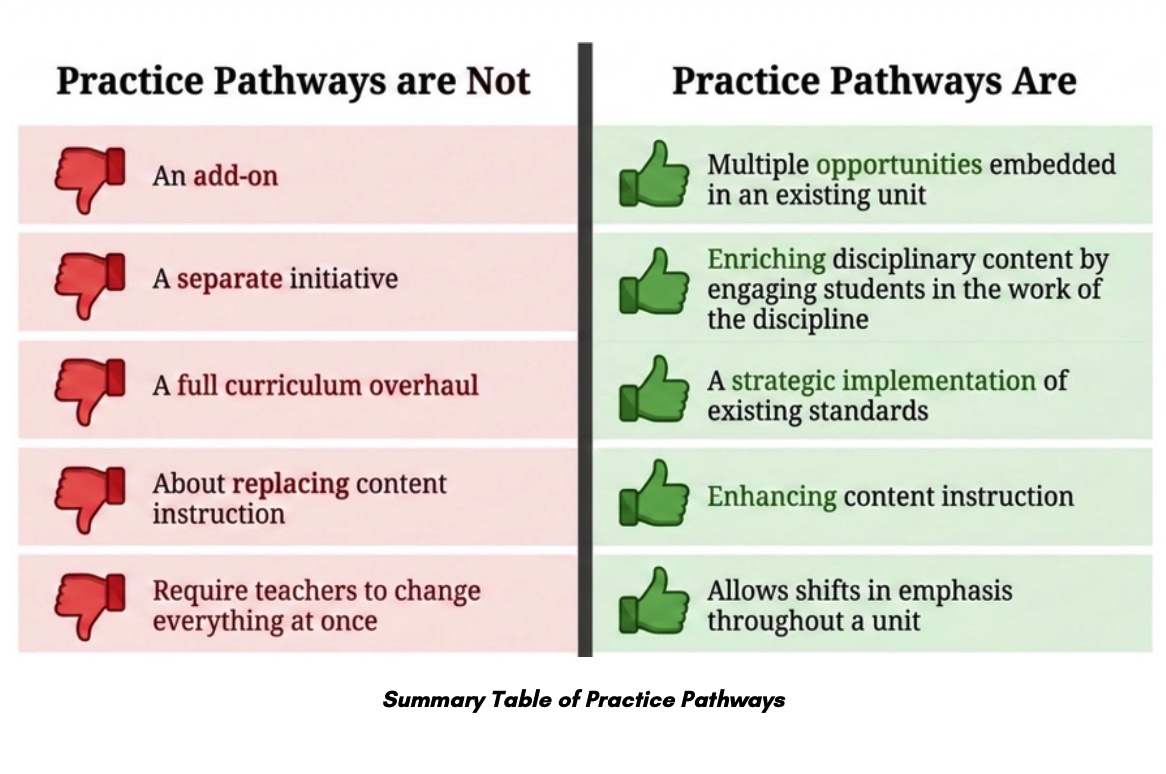
Beyond Content: Preparing Students to Solve, Communicate, and Lead with Practice Pathways

DiMaria, S. & Davis, C. (2026). Beyond Content: Preparing Students to Solve, Communicate, and Lead with Practice Pathways.

This brief provides instructional coaches and teachers in established Project Based Learning schools, with the grounding needed to explain why focusing on disciplinary practices through Practice Pathways supports deeper student learning and guidance on incorporating these practices into unit and project design.

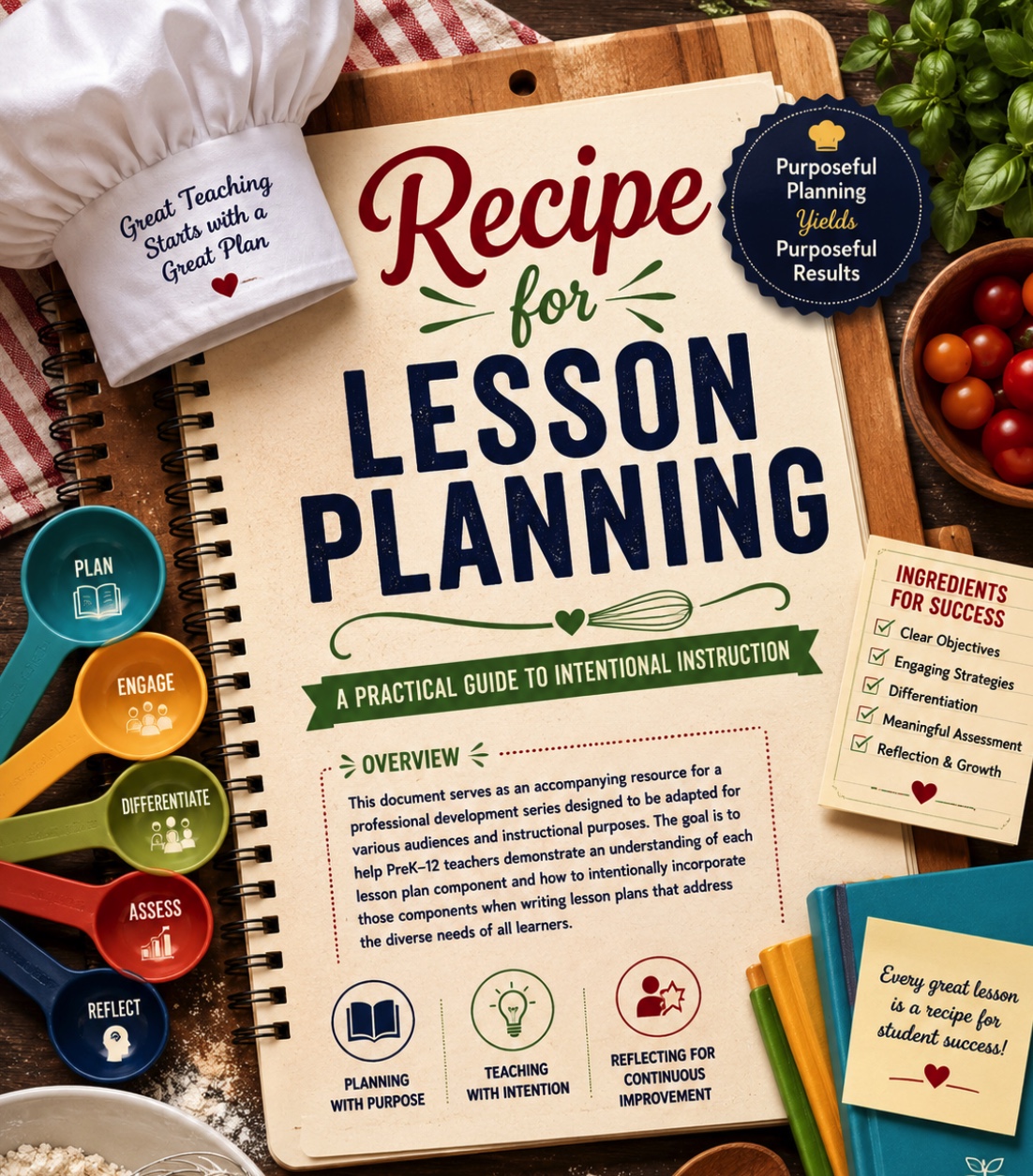
Recipe for Lesson Planning

Yeadon, B., & Kelley, C. (2026). Recipe for Lesson Planning.

Just as a master chef follows a recipe while adding creativity and expertise, effective teachers use intentional planning to create meaningful learning experiences. A lesson plan is more than a schedule of activities, it is likely a carefully crafted recipe that blends essential ingredients such as: standards, learning objectives, engaging activities, strategies for differentiation, assessment, and reflection to support student success. Purposeful lesson planning increases teacher confidence, promotes active student participation, and contributes to higher levels of achievement.

The MIRROR Framework

Taylor, L., & Shimoda, T. (2026). The MIRROR Framework.

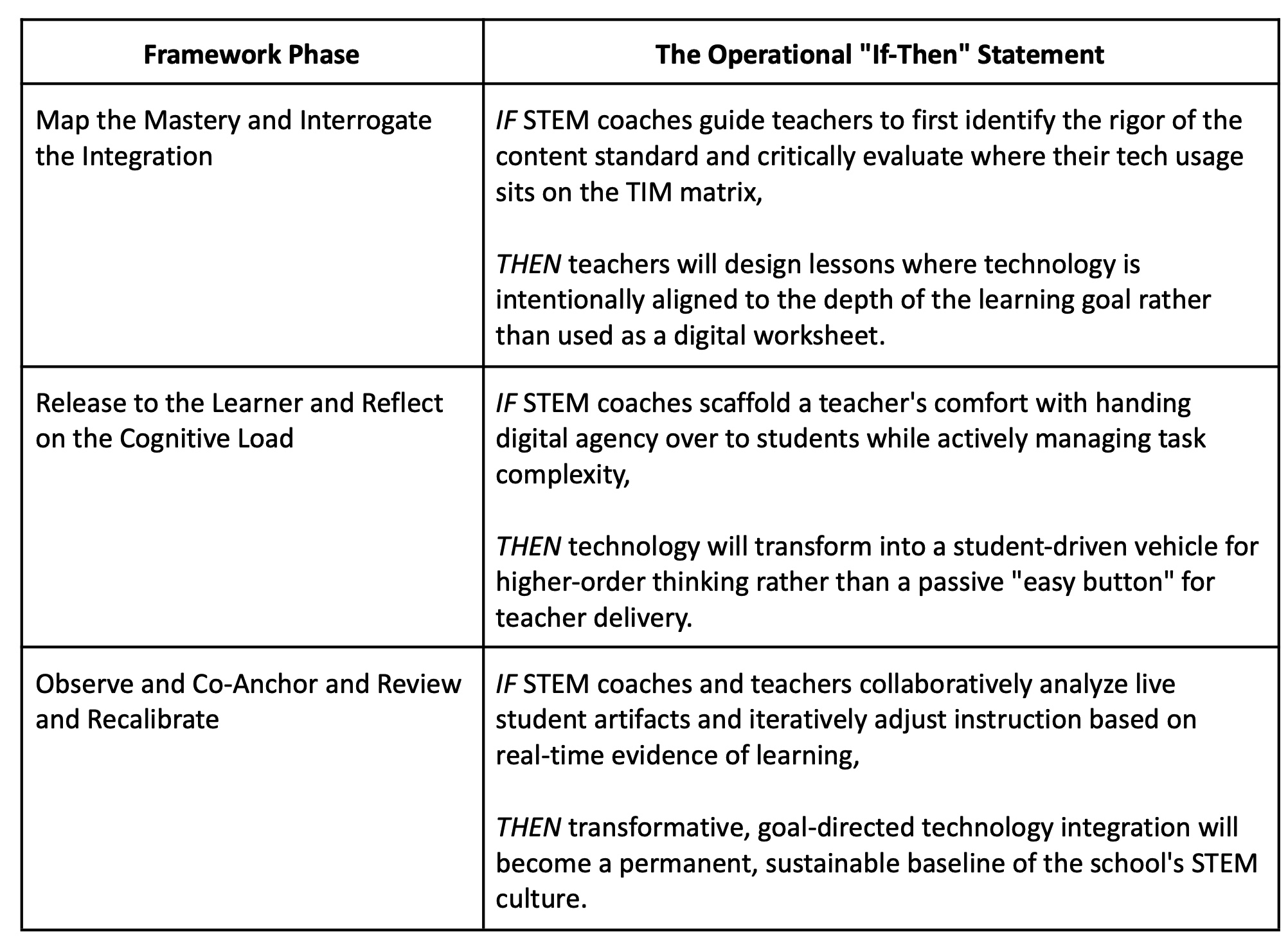
The MIRROR Framework (Map the mastery, Interrogate the integration, Release to the learner, Reflect on the cognitive load, Observe and co-anchor, Review and recalibrate) is a multi-tiered coaching
blueprint for STEM instructional coaches. It helps them shift the classroom conversation from “What app/program are we using today?” to “How is this digital tool helping our students think on a deeper level about content?” This shift should empower students to demonstrate deeper conceptual understanding of content and skills.

MIRROR helps STEM coaches to scaffold teacher awareness and the ability to move from Entry level to the Transformation level of the Technology Integration Matrix (TIM, 2026), where technology acts as a collaborative, authentic, and goal-directed vehicle for learning rather than an “easy button” or a compliance checkbox. In this white paper, we introduce the problem that MIRROR will address, present a case study and results of a survey to help ground the framework, describe the MIRROR strategies, present a theory of action based on the framework, and provide a suggested timeline for the actions.
Tech with Intent: A Digital Mentor Guide

Hightower Herron, S., & Ullah, T. (2026). Tech with Intent: A Digital Mentor Guide.

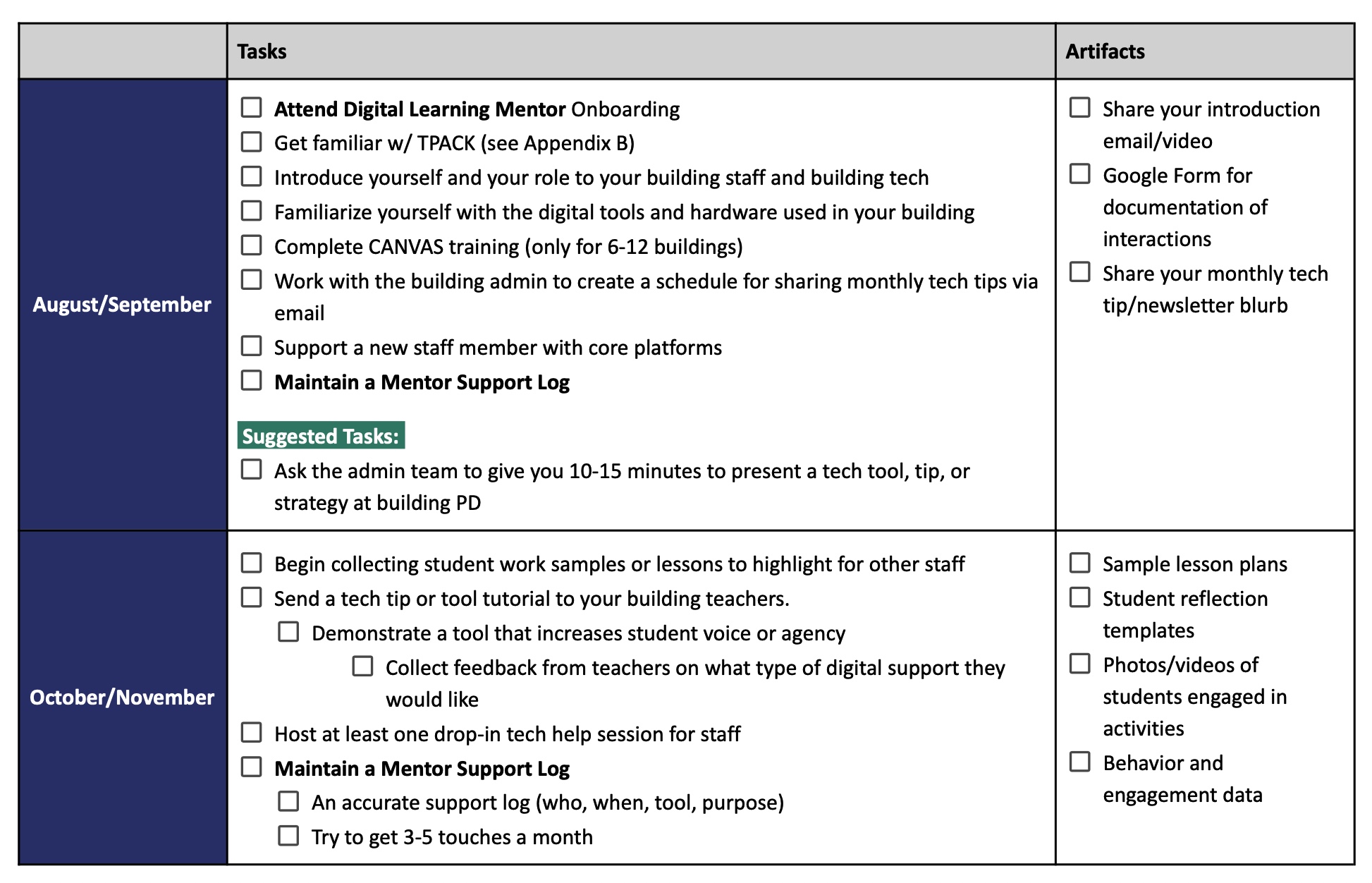
This research brief addresses a problem of practice in a public school setting that supports the integration of instructional tools into K-12 classrooms, specifically the district’s limited technology integration support. To solve this challenge, this brief outlines goals, objectives, and an actionable year
long guide for building capacity for digital mentors to consistently support teachers in integrating technology into instruction. The brief provides the guide with a grounding in research that supports high norms of professional learning community practices and the implementation of Technological Pedagogical Content Knowledge (TPACK) to the participants in this work. The research brief frames how
the guide addresses role expectations, support structures, resources, instructional intents, and accountability measures for the 2026-2027 school year.

Memphis School of Excellence Technology Integration Guide

Ware-Royal, K., & Widman, S. (2026). Memphis School of Excellence Technology Integration Guide.

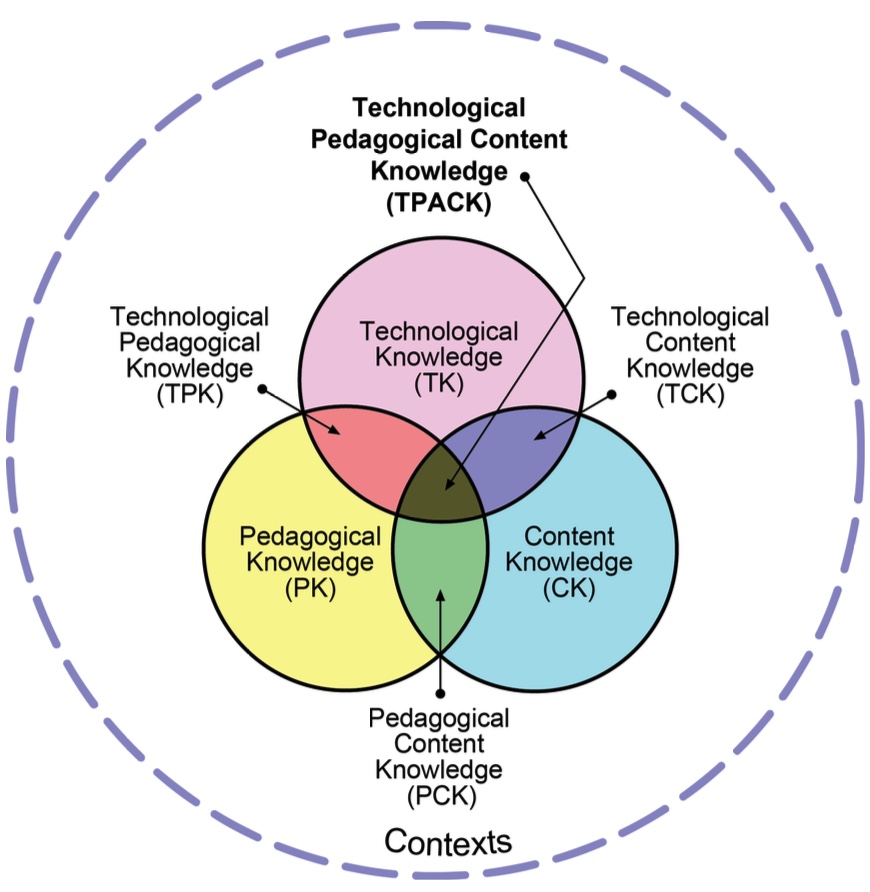
Technology alone does not transform learning. The impact comes from how teachers use technology to support strong instruction, meaningful learning experience, and student ownership.

Before choosing a technology tool, consider the connection between Content, Pedagogy, and Technology. How do content, teaching strategies, and technology work together to increase engagement?

Facilitating Teacher Thinking on Cultivating Third Spaces in STEM Classrooms

Ehrmann, A., & Sushil, S. (2026). Facilitating Teacher Thinking on Cultivating Third Spaces in STEM Classrooms

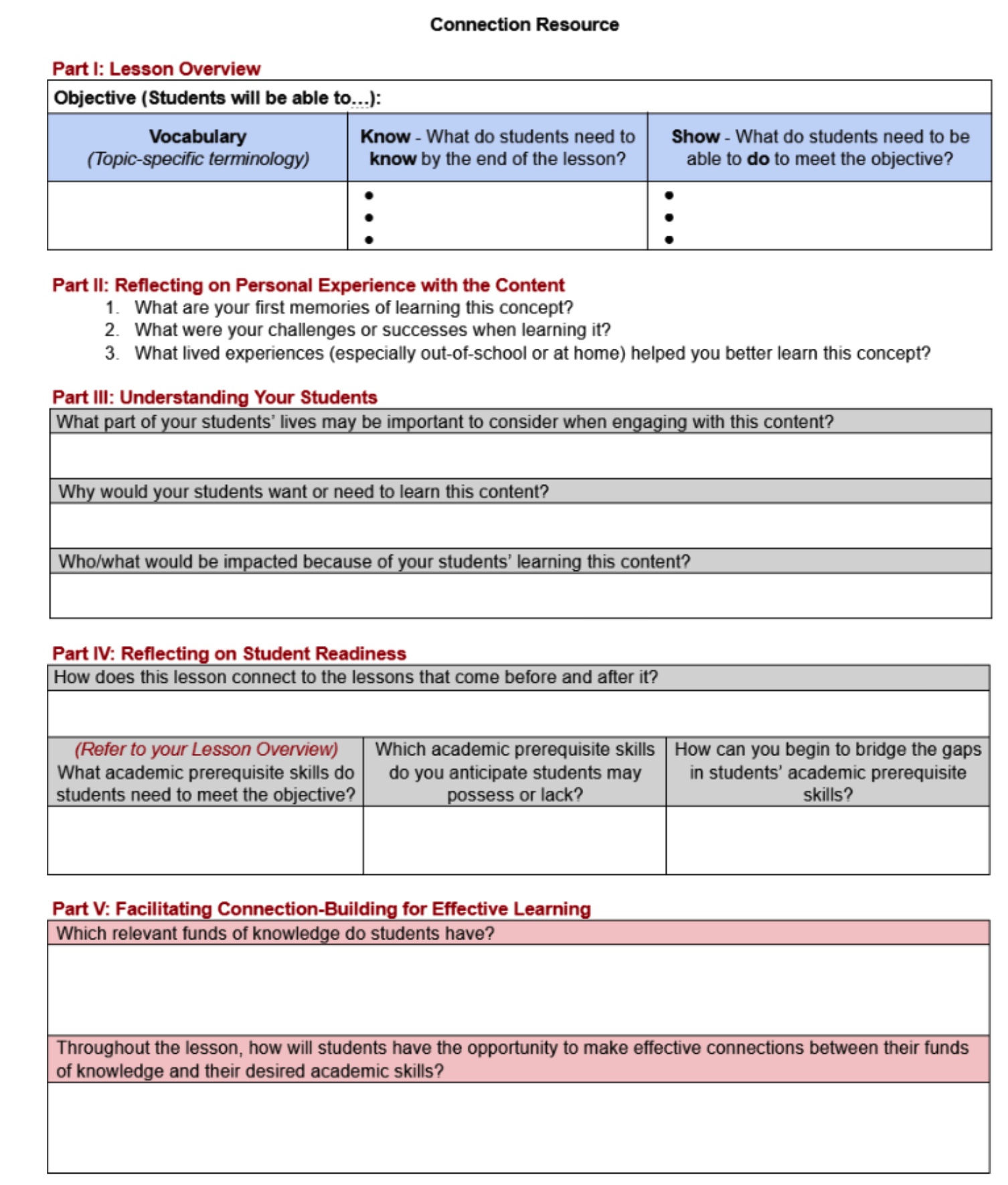
This brief presents a resource (Appendix A) to help teachers consider the relevant funds of knowledge that they and their students bring to learning the content (Moll et al., 2006). This resource can also serve as a guide for coaching conversations in which teachers reflect on their practice and effectiveness
through a culturally-responsive lens (Gay, 2018; Ladson-Billings, 2023). We hope readers will use the resource presented here to guide their teaching and/or coaching to leverage students’ funds of knowledge and to cultivate third spaces in the classroom where teachers bring together and extend students’ home, community, and school experiences (Gutiérrez, 2008).

NSF logo

This material is supported by National Science Foundation awards #2300618 and #2300619. Any opinions, findings, conclusions, or recommendations are those of the authors and do not necessarily reflect the views of NSF.

Contact Us