
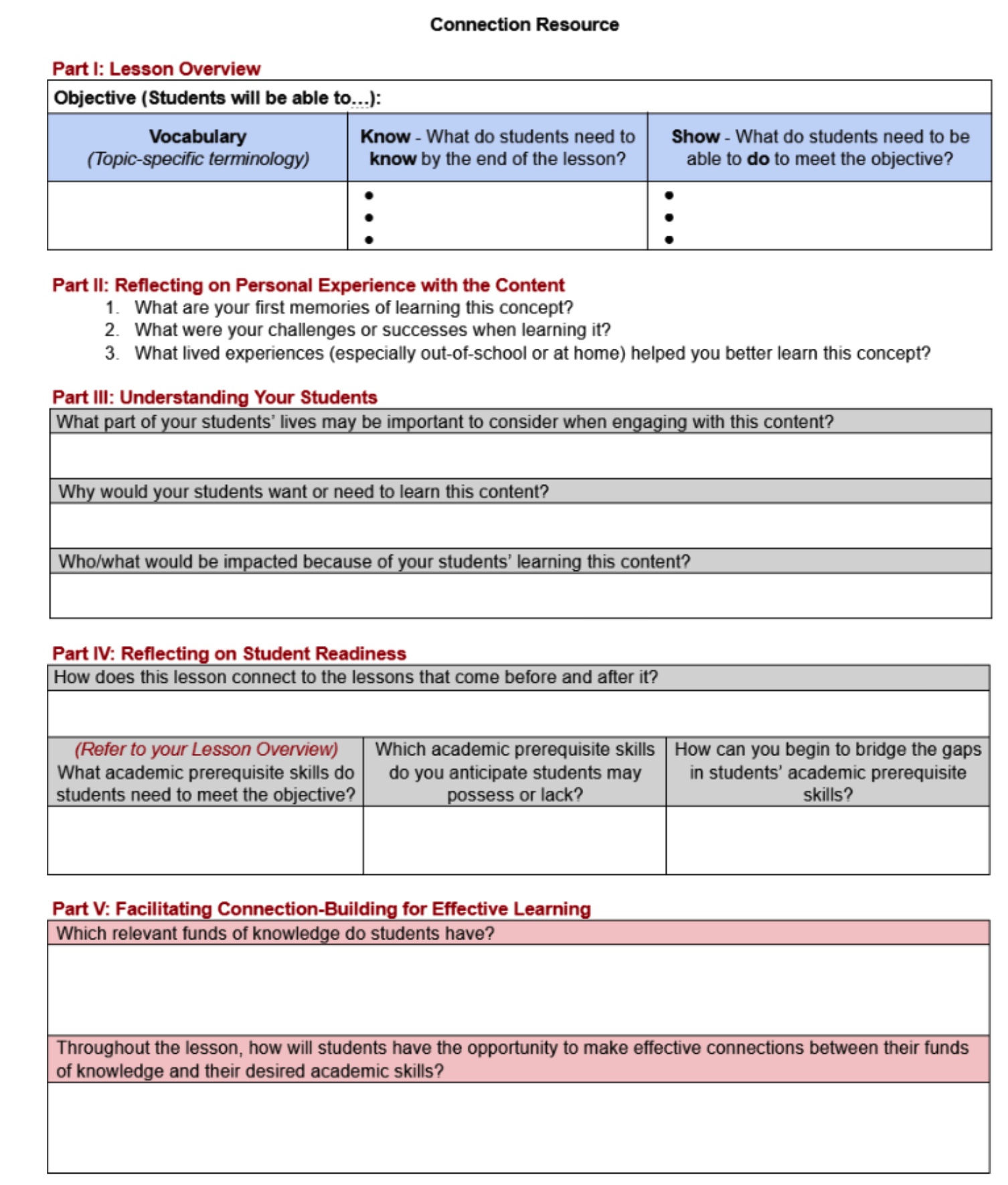

Facilitating Teacher Thinking on Cultivating Third Spaces in STEM Classrooms

Ehrmann, A., & Sushil, S. (2026). Facilitating Teacher Thinking on Cultivating Third Spaces in STEM Classrooms

This brief presents a resource (Appendix A) to help teachers consider the relevant funds of knowledge that they and their students bring to learning the content (Moll et al., 2006). This resource can also serve as a guide for coaching conversations in which teachers reflect on their practice and effectiveness
through a culturally-responsive lens (Gay, 2018; Ladson-Billings, 2023). We hope readers will use the resource presented here to guide their teaching and/or coaching to leverage students’ funds of knowledge and to cultivate third spaces in the classroom where teachers bring together and extend students’ home, community, and school experiences (Gutiérrez, 2008).
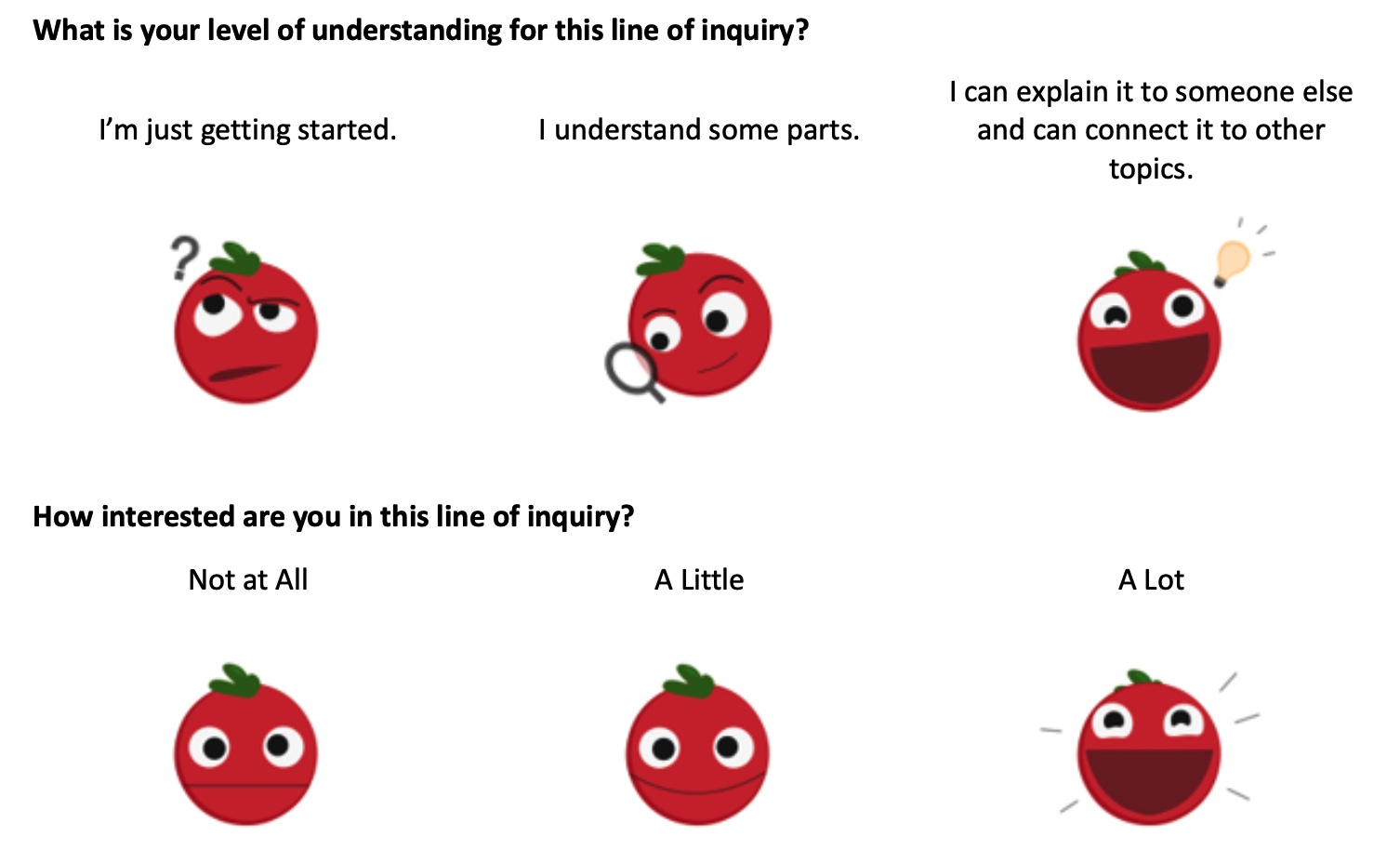

A Survey Tool to Reveal Student Thinking

McGuinness, K., Hodges, M., & Rutherford, T. (2026). A Survey Tool to Reveal Student Thinking.

Supporting the communication skills of English learners and others from marginalized backgrounds is a unique discipline-specific challenge for teachers. Although listening, speaking, reading, and writing can be conceptualized as broad skills, each responds to subject-specific contexts in different ways. For example, speaking in mathematics may be different than in history, with different vocabulary and ways of knowing/communicating.

Surveys can provide information both on student understandings and on their motivational or affective responses to a topic or material. Questions should be chosen to provide the information teachers need to judge the effectiveness of a lesson in light of their school and district goals and standards.

NSF logo

This material is supported by National Science Foundation awards #2300618 and #2300619. Any opinions, findings, conclusions, or recommendations are those of the authors and do not necessarily reflect the views of NSF.

Contact Us