Educational AI Implementation Guidelines

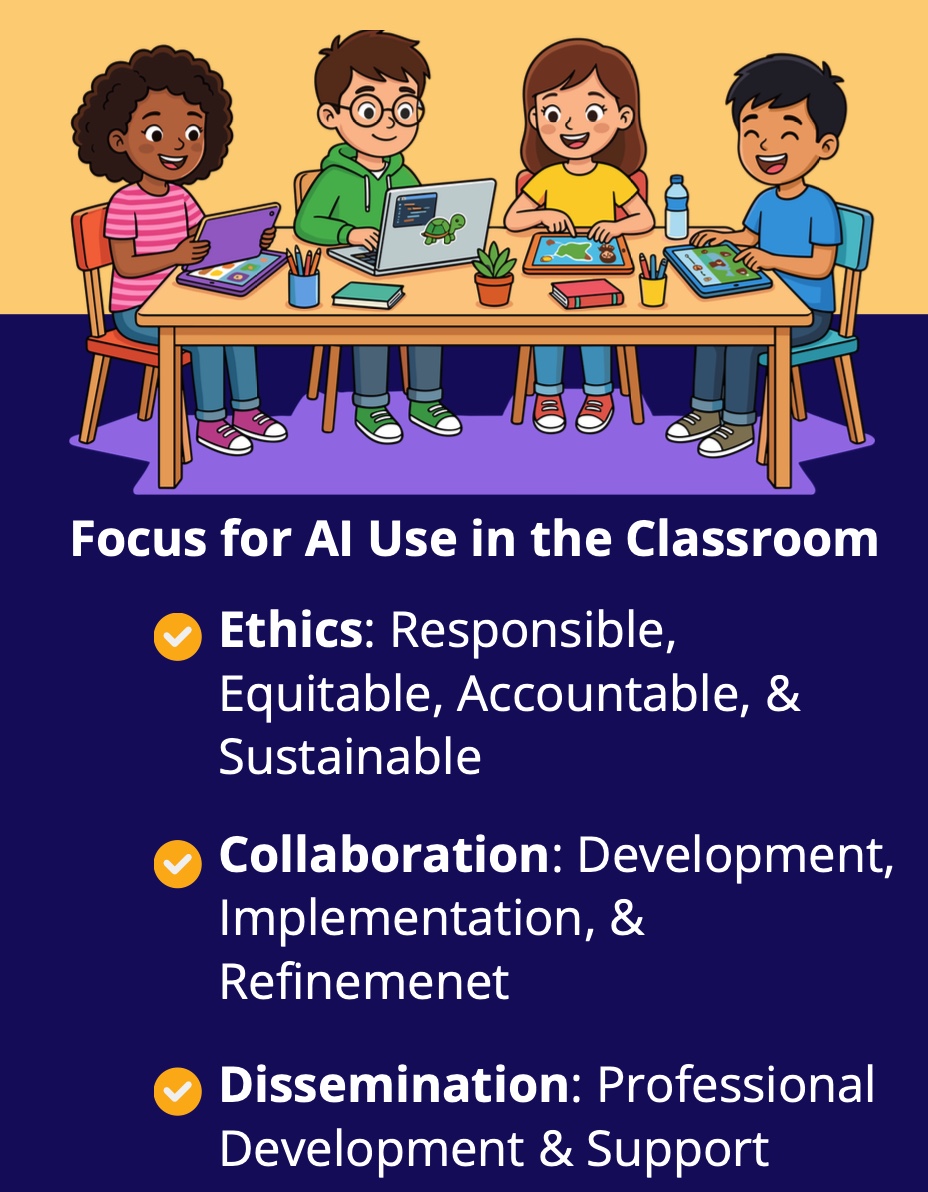
Mays, M., & Harper, A. (2026). Educational AI Implementation Guidelines. As the AI landscape continues to expand, schools are developing policies and procedures to ensure learning environments and their stakeholders (i.e., Leaders, teachers, instructional coaches, parents, and students) are adequately prepared for the future. In doing so, schools need to be equipped with strategies and … Read more

Beyond AI Adoption: Building an AI Instructional Ecosystem Through Instructional Coaching

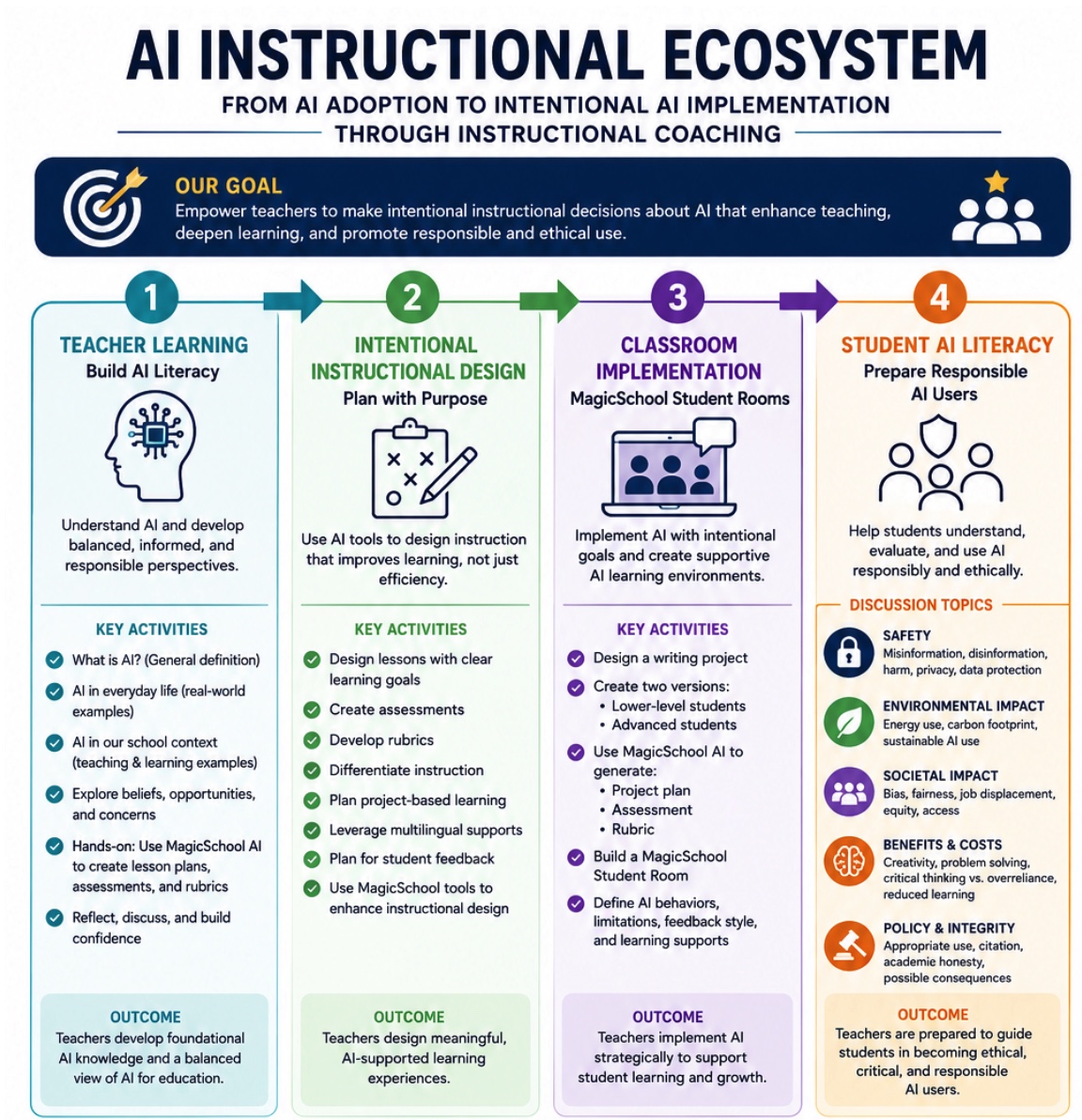
Sadik, O., & De Los Reyes, J. (2026). Beyond AI Adoption: Building an AI Instructional Ecosystem Through Instructional Coaching. This Research Practice Brief presents the AI Instructional Ecosystem, a coaching-supported professional learning framework designed to move schools from AI adoption toward intentional AI implementation. Rather than centering technology, the framework positions instructional coaching as the … Read more

Best Practices for AI-Supported Lesson Planning: A Research Practice Brief for Teachers New to AI Infographic

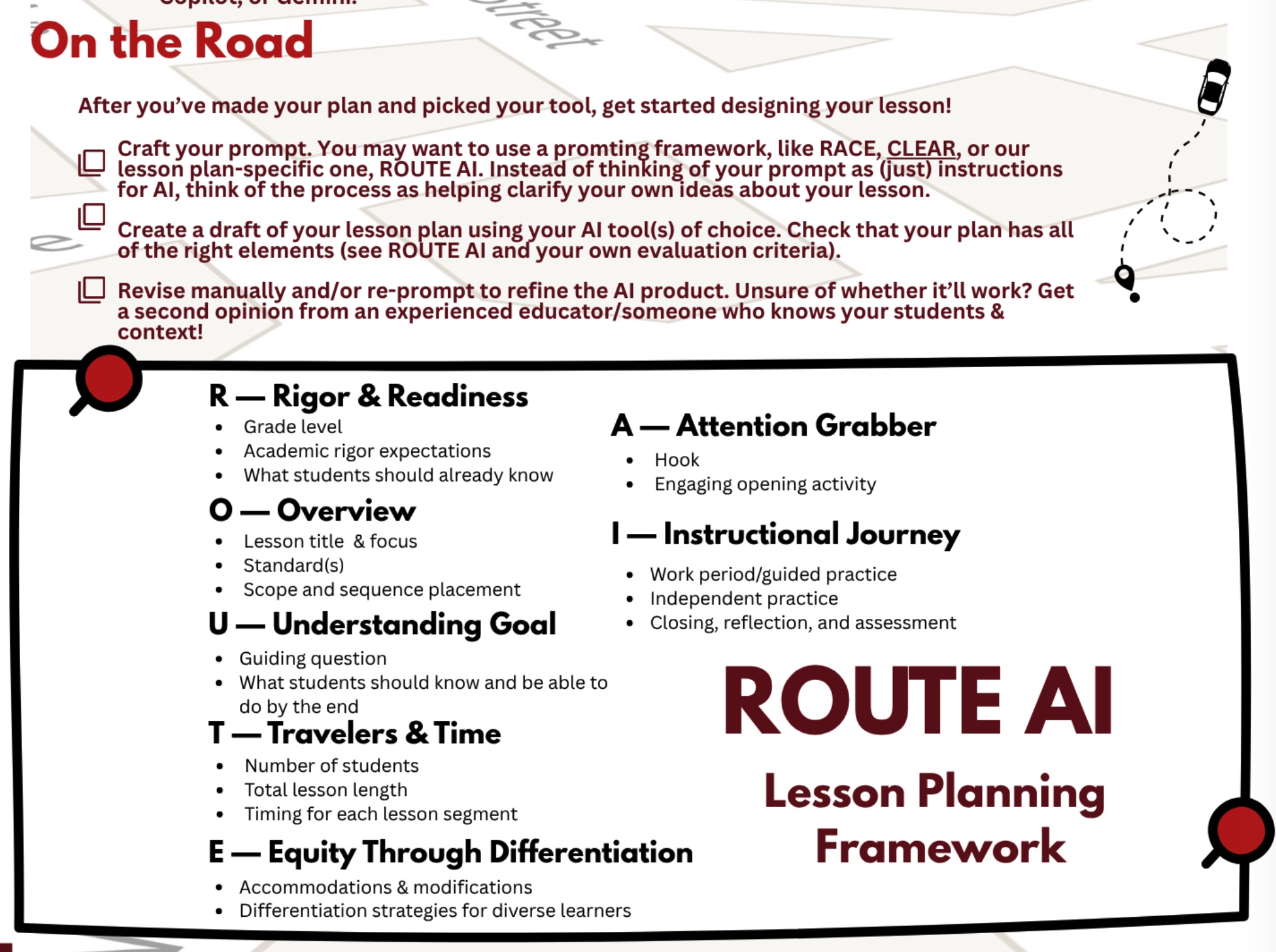
Cannon, N. & Burris, S. (2026). Best Practices for AI-Supported Lesson Planning: A Research Practice Brief for Teachers New to AI Infographic. This brief is designed to support teachers who are new to AI in their exploration of incorporating–or making decisions not to use–AI in their teaching practice. In this document, we focus on lesson … Read more

AI Literacy in Action: A practical guide for teaching, learning, and leadership

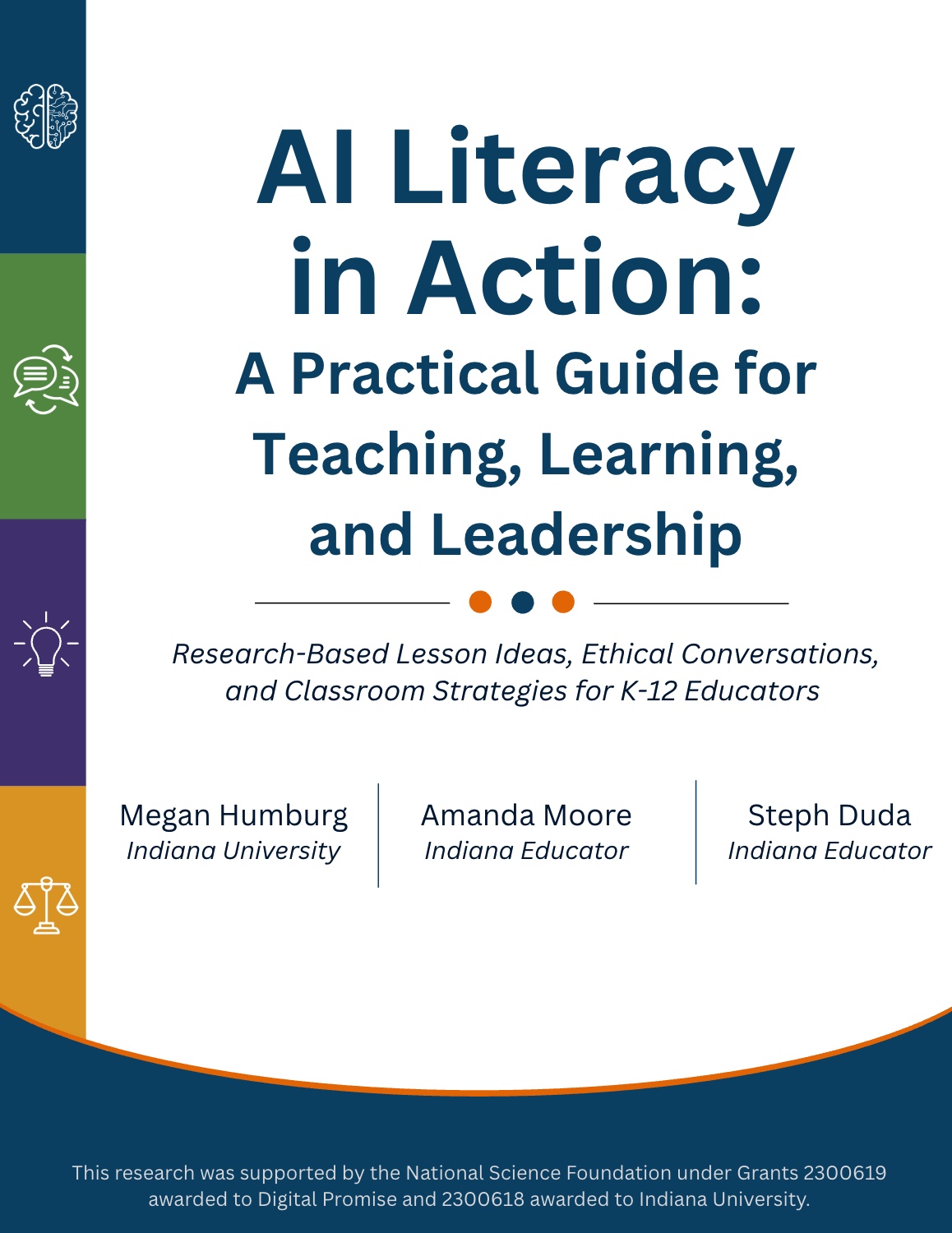
Humburg, M., Moore, A. & Duda, S. (2026). AI Literacy in Action: A practical guide for teaching, learning, and leadership. AI is an umbrella term encompassing many different types of artificial intelligence. While there are many benefits to using AI tools, it is still a growing field, and there are limitations to what current AI … Read more

NSF logo

This material is supported by National Science Foundation awards #2300618 and #2300619. Any opinions, findings, conclusions, or recommendations are those of the authors and do not necessarily reflect the views of NSF.

Contact Us