Beyond Content: Preparing Students to Solve, Communicate, and Lead with Practice Pathways
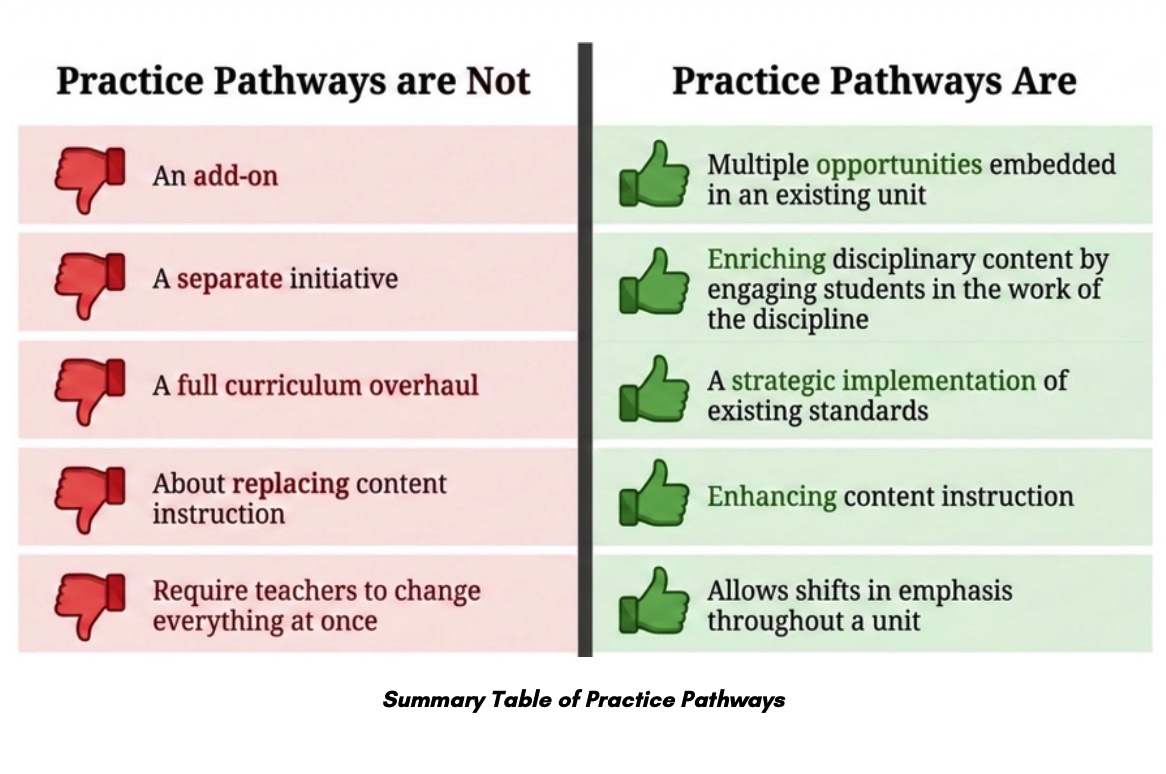
DiMaria, S. & Davis, C. (2026). Beyond Content: Preparing Students to Solve, Communicate, and Lead with Practice Pathways. This brief provides instructional coaches and teachers in established Project Based Learning schools, with the grounding needed to explain why focusing on disciplinary practices through Practice Pathways supports deeper student learning and guidance on incorporating these practices … Read more
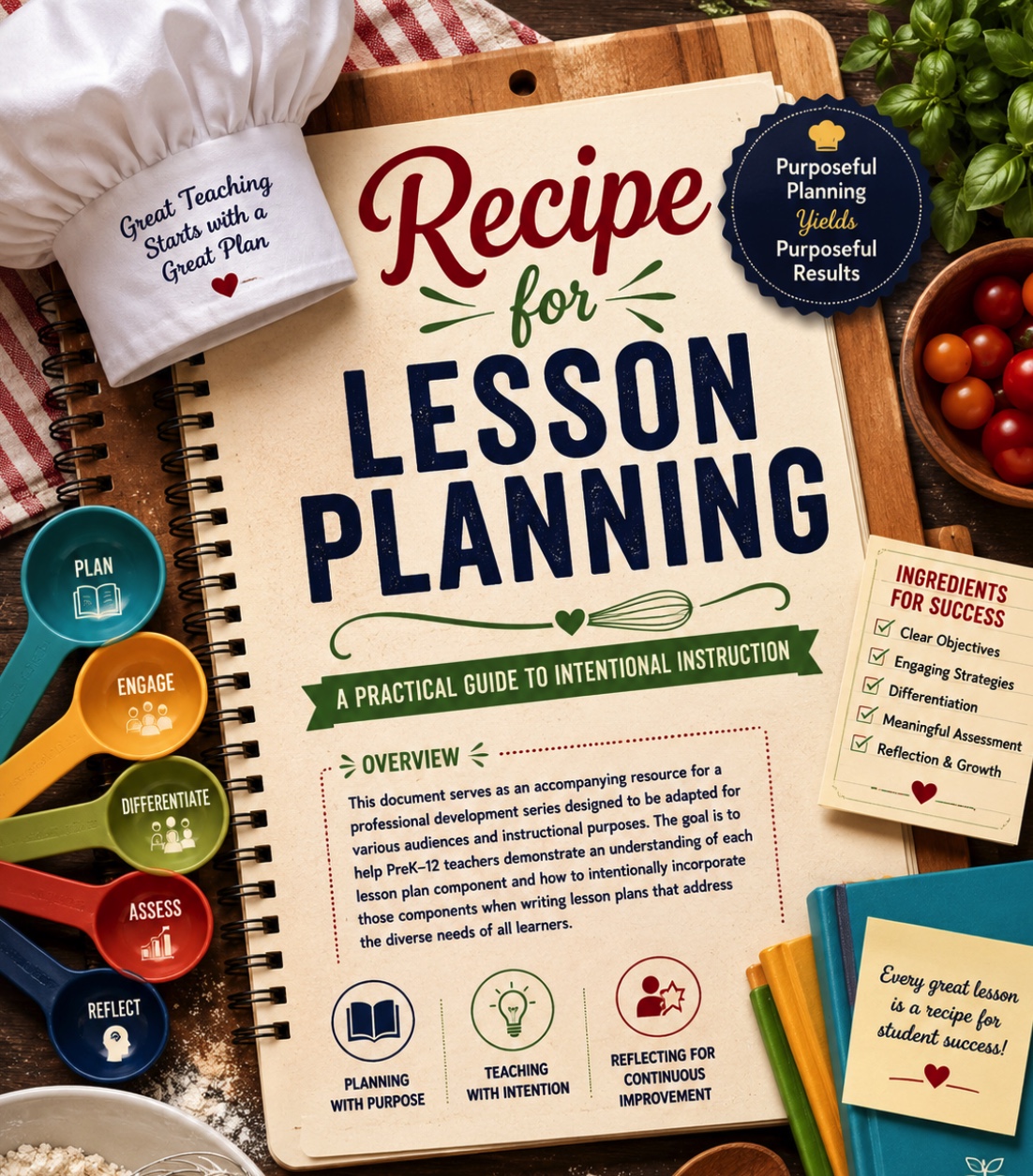
Recipe for Lesson Planning

Yeadon, B., & Kelley, C. (2026). Recipe for Lesson Planning. Just as a master chef follows a recipe while adding creativity and expertise, effective teachers use intentional planning to create meaningful learning experiences. A lesson plan is more than a schedule of activities, it is likely a carefully crafted recipe that blends essential ingredients such … Read more

Facilitating Teacher Thinking on Cultivating Third Spaces in STEM Classrooms

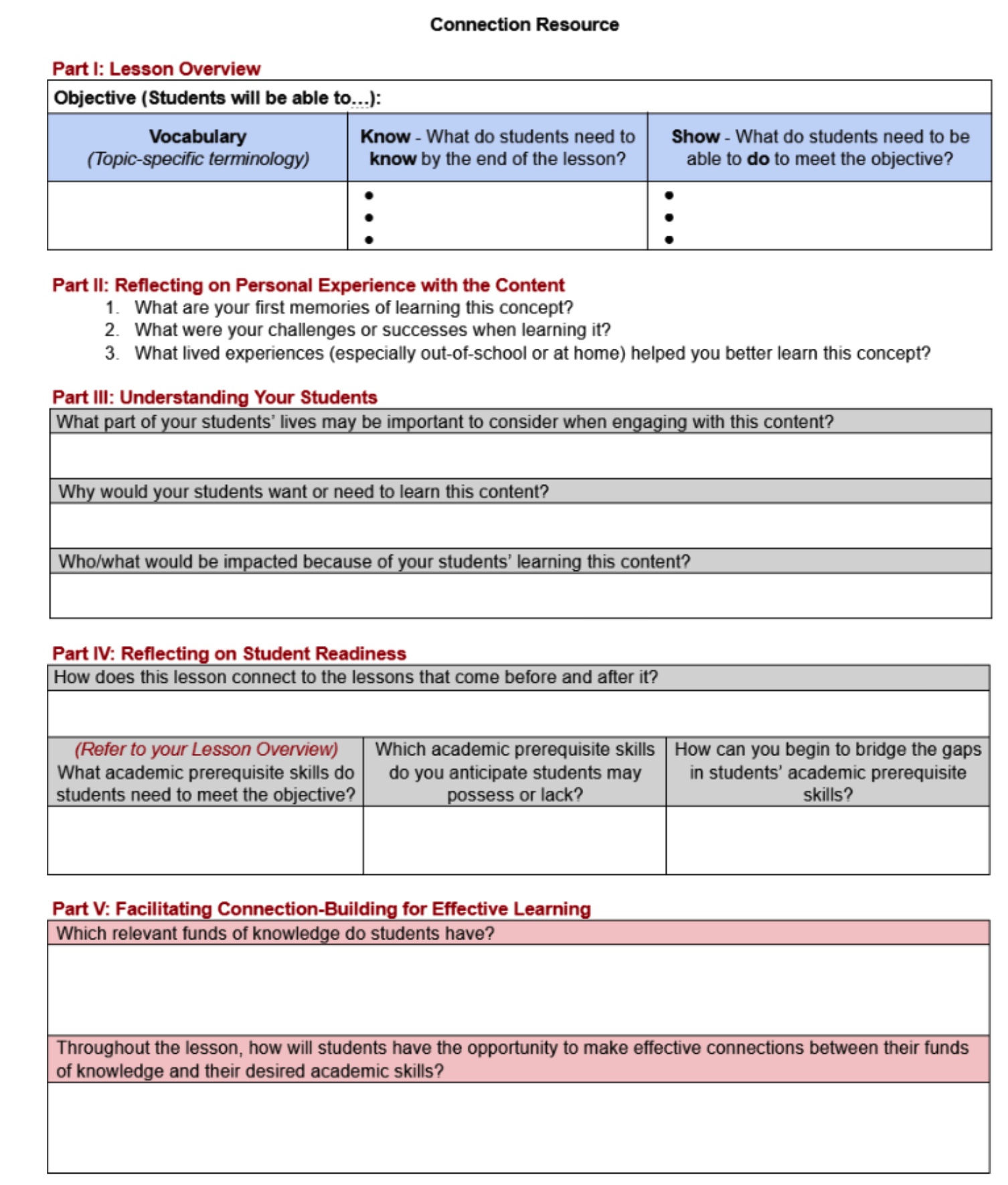
Ehrmann, A., & Sushil, S. (2026). Facilitating Teacher Thinking on Cultivating Third Spaces in STEM Classrooms This brief presents a resource (Appendix A) to help teachers consider the relevant funds of knowledge that they and their students bring to learning the content (Moll et al., 2006). This resource can also serve as a guide for … Read more

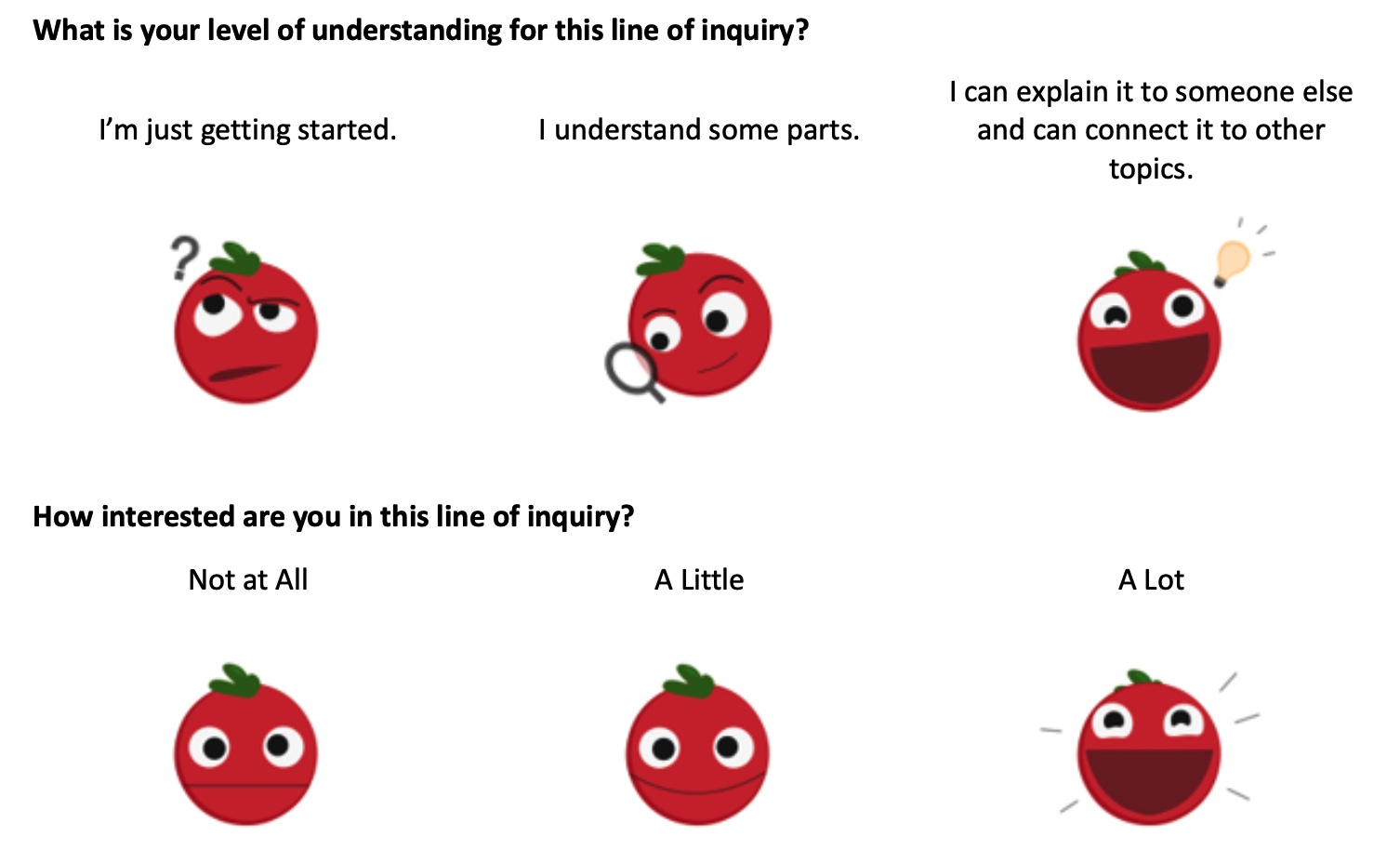
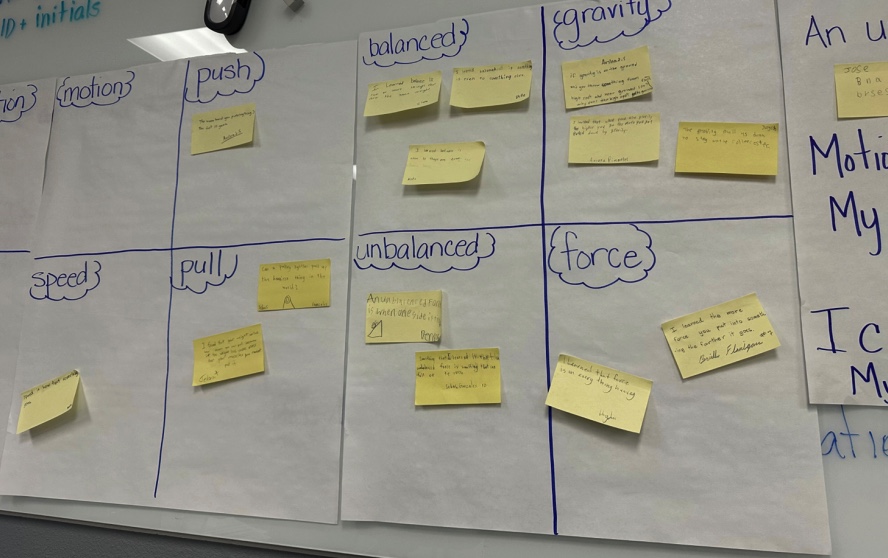
A Survey Tool to Reveal Student Thinking

McGuinness, K., Hodges, M., & Rutherford, T. (2026). A Survey Tool to Reveal Student Thinking. Supporting the communication skills of English learners and others from marginalized backgrounds is a unique discipline-specific challenge for teachers. Although listening, speaking, reading, and writing can be conceptualized as broad skills, each responds to subject-specific contexts in different ways. For … Read more

Scaffolding Engagement for All Learners in Project-Based Learning

McGuinness, K., & Rutherford, T. (2025). Scaffolding Engagement for All Learners in Project-Based Learning. Project-Based Learning (PjBL) has been part of the educational landscape for many years and teachers are motivated to include PjBL in their classrooms for its benefits on student motivation, engagement and learning. However, PjBL can be challenging to define, difficult to … Read more

NSF logo

This material is supported by National Science Foundation awards #2300618 and #2300619. Any opinions, findings, conclusions, or recommendations are those of the authors and do not necessarily reflect the views of NSF.

Contact Us