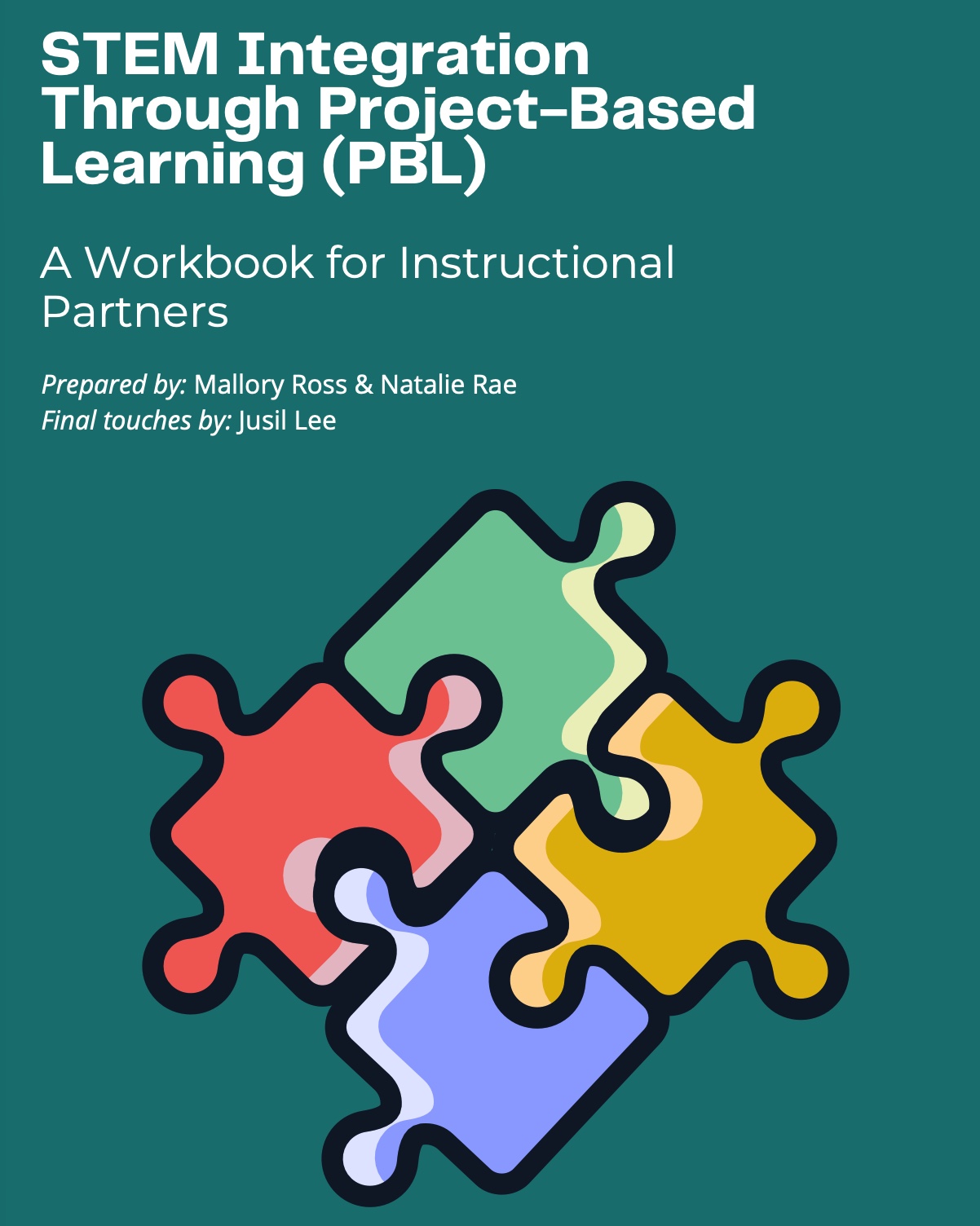
STEM Integration Through Project-Based Learning (PBL)

Ross, M. & Rae, N. (2026). STEM Integration Through Project-Based Learning (PBL).

Follow the workbook in order, or decide where to begin based on your schools’ needs:

  • Need a shared understanding of what high quality PBL looks like? Use Tool #1: Building Shared Foundations
  • Feeling unprepared to design and facilitate PBL experiences? Use Tool #2: Building Capacity
  • Need help turning an isolated PBL effort to a sustainable schoolwide model? Use Tool #3: Building a Collaborative Ecosystem
  • Need help planning a STEM integrated PBL? Use Tool #4: Building an Integrated Plan

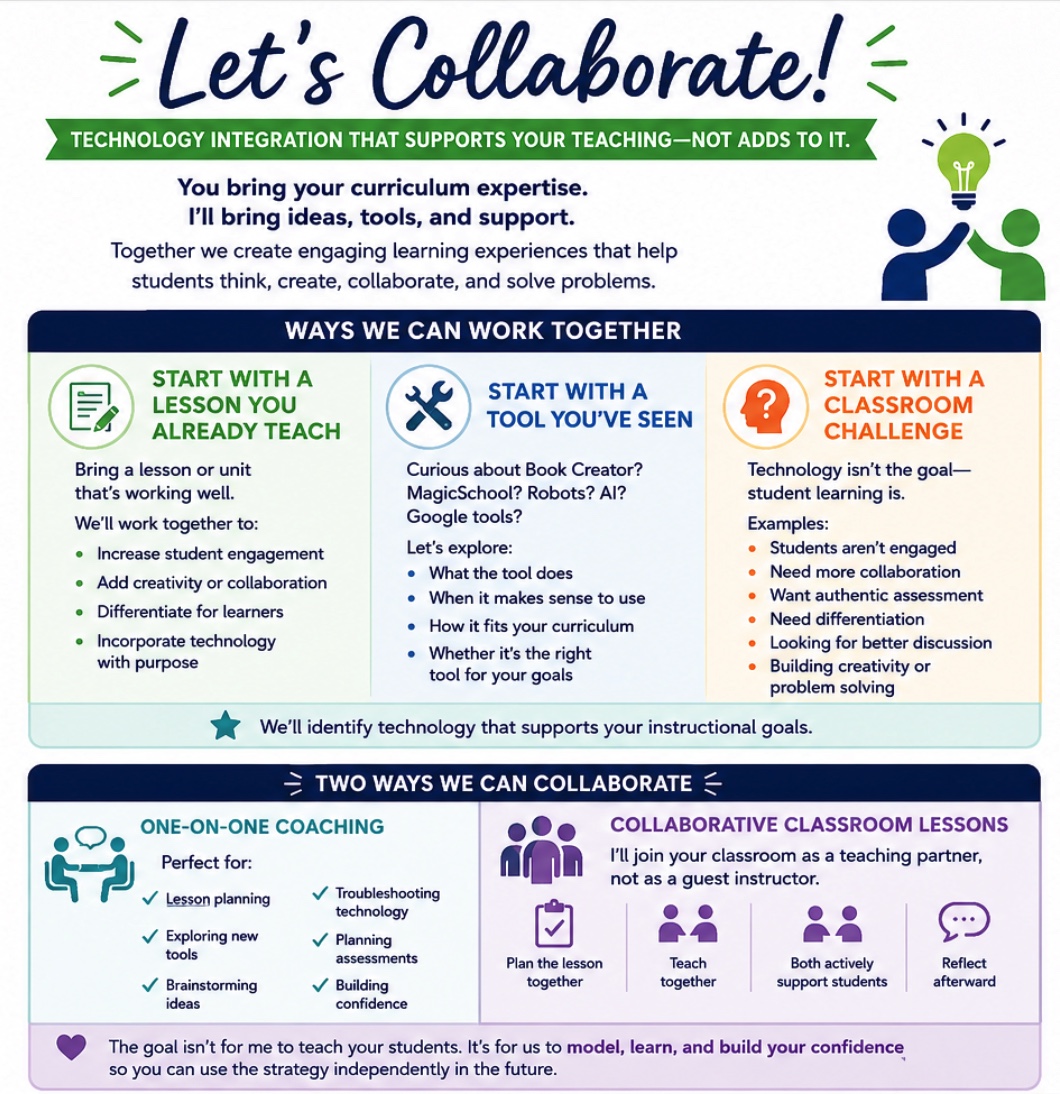
Teacher Brief: Collaborating for Effective Technology Integration

Lescault, T. & Codding, D. (2026). Collaborating for Effective Technology Integration.

Technology integration is most effective when it is purposeful, collaborative, and connected to student learning goals. Collaboration between teachers and instructional technology specialists, coaches, librarians, curriculum leaders, and colleagues can help educators identify meaningful ways to use technology that enhance learning rather than simply adding another tool to the classroom. This brief aims to achieve the following:

  • Clarify the purpose of technology-integration collaborations.
  • Address common misconceptions.
  • Provide actionable steps for teachers.
  • Highlight benefits for students.
  • Support teachers in growing toward independent, confident technology integration.

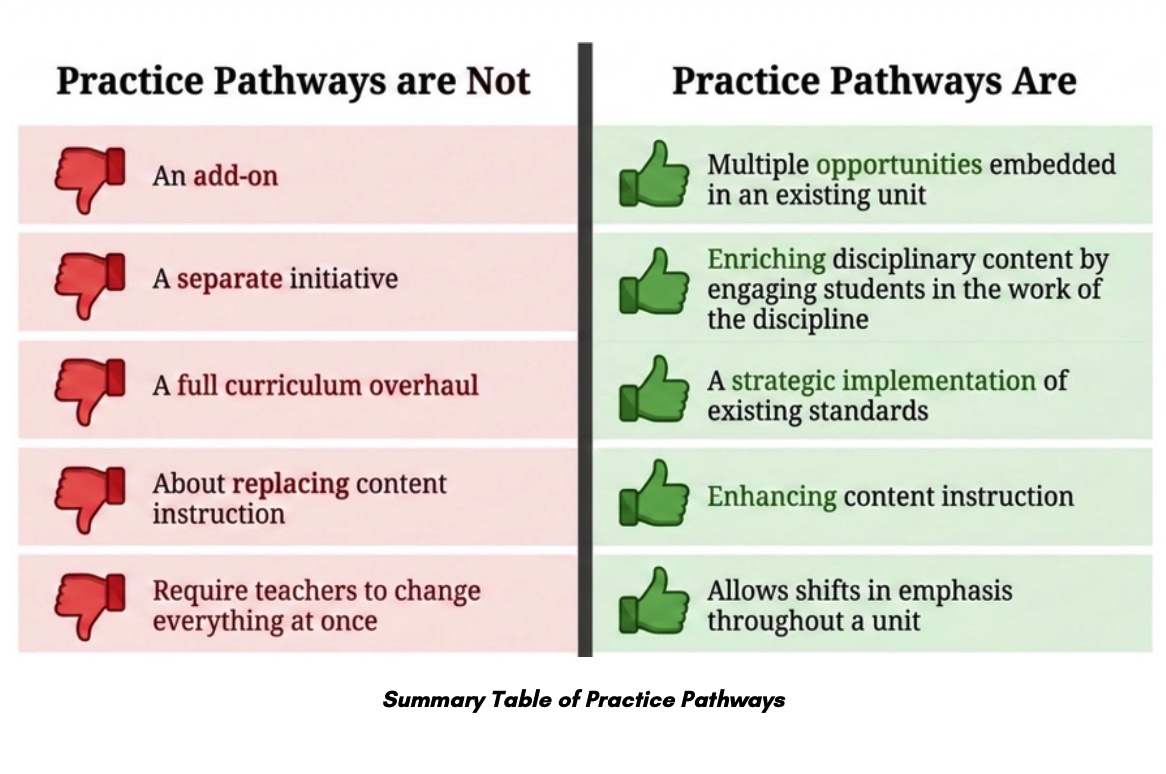
Beyond Content: Preparing Students to Solve, Communicate, and Lead with Practice Pathways

DiMaria, S. & Davis, C. (2026). Beyond Content: Preparing Students to Solve, Communicate, and Lead with Practice Pathways.

This brief provides instructional coaches and teachers in established Project Based Learning schools, with the grounding needed to explain why focusing on disciplinary practices through Practice Pathways supports deeper student learning and guidance on incorporating these practices into unit and project design.

Recipe for Lesson Planning

Yeadon, B., & Kelley, C. (2026). Recipe for Lesson Planning.

Just as a master chef follows a recipe while adding creativity and expertise, effective teachers use intentional planning to create meaningful learning experiences. A lesson plan is more than a schedule of activities, it is likely a carefully crafted recipe that blends essential ingredients such as: standards, learning objectives, engaging activities, strategies for differentiation, assessment, and reflection to support student success. Purposeful lesson planning increases teacher confidence, promotes active student participation, and contributes to higher levels of achievement.

The MIRROR Framework

Taylor, L., & Shimoda, T. (2026). The MIRROR Framework.

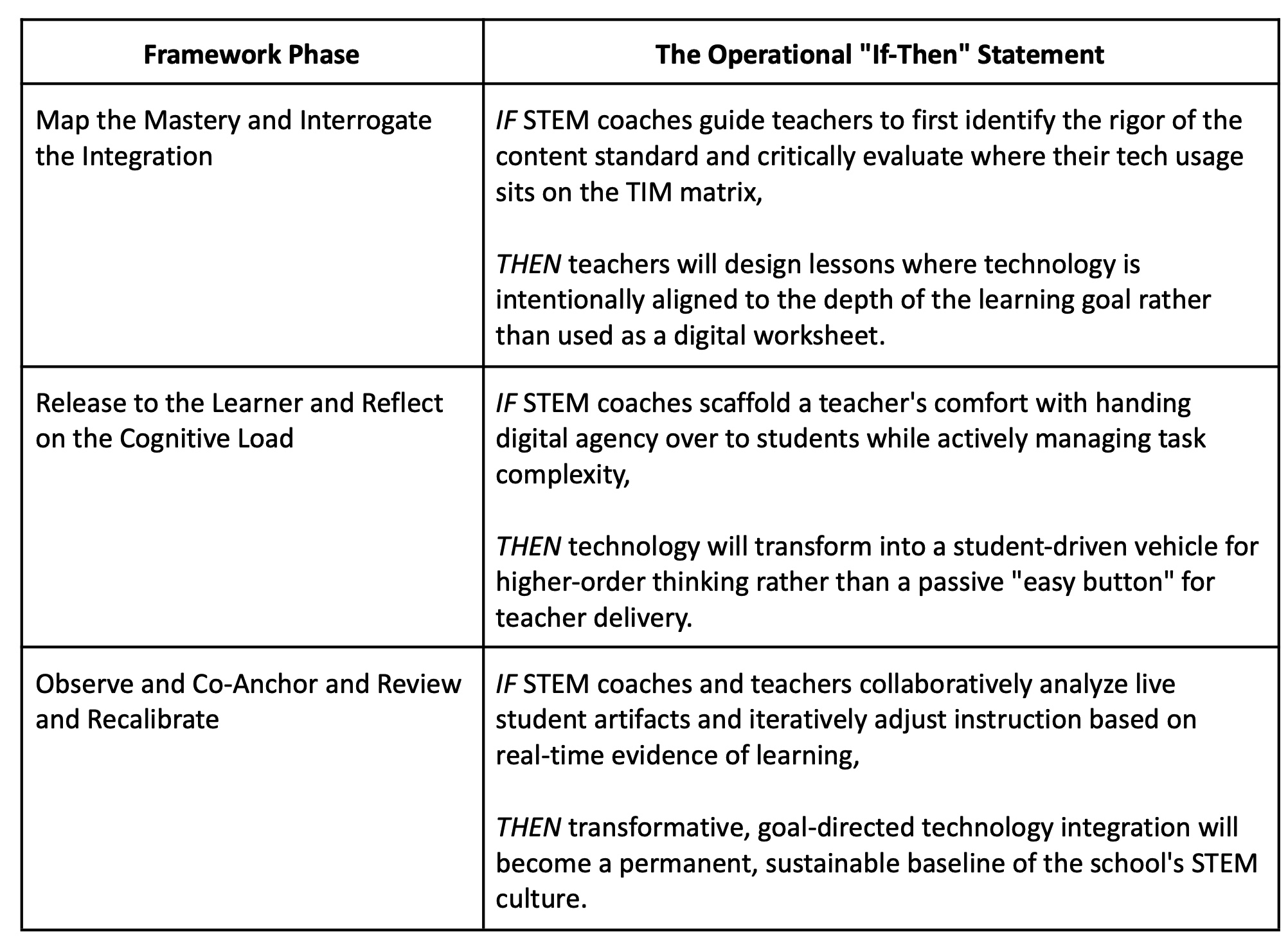
The MIRROR Framework (Map the mastery, Interrogate the integration, Release to the learner, Reflect on the cognitive load, Observe and co-anchor, Review and recalibrate) is a multi-tiered coaching
blueprint for STEM instructional coaches. It helps them shift the classroom conversation from “What app/program are we using today?” to “How is this digital tool helping our students think on a deeper level about content?” This shift should empower students to demonstrate deeper conceptual understanding of content and skills.

MIRROR helps STEM coaches to scaffold teacher awareness and the ability to move from Entry level to the Transformation level of the Technology Integration Matrix (TIM, 2026), where technology acts as a collaborative, authentic, and goal-directed vehicle for learning rather than an “easy button” or a compliance checkbox. In this white paper, we introduce the problem that MIRROR will address, present a case study and results of a survey to help ground the framework, describe the MIRROR strategies, present a theory of action based on the framework, and provide a suggested timeline for the actions.
Tech with Intent: A Digital Mentor Guide

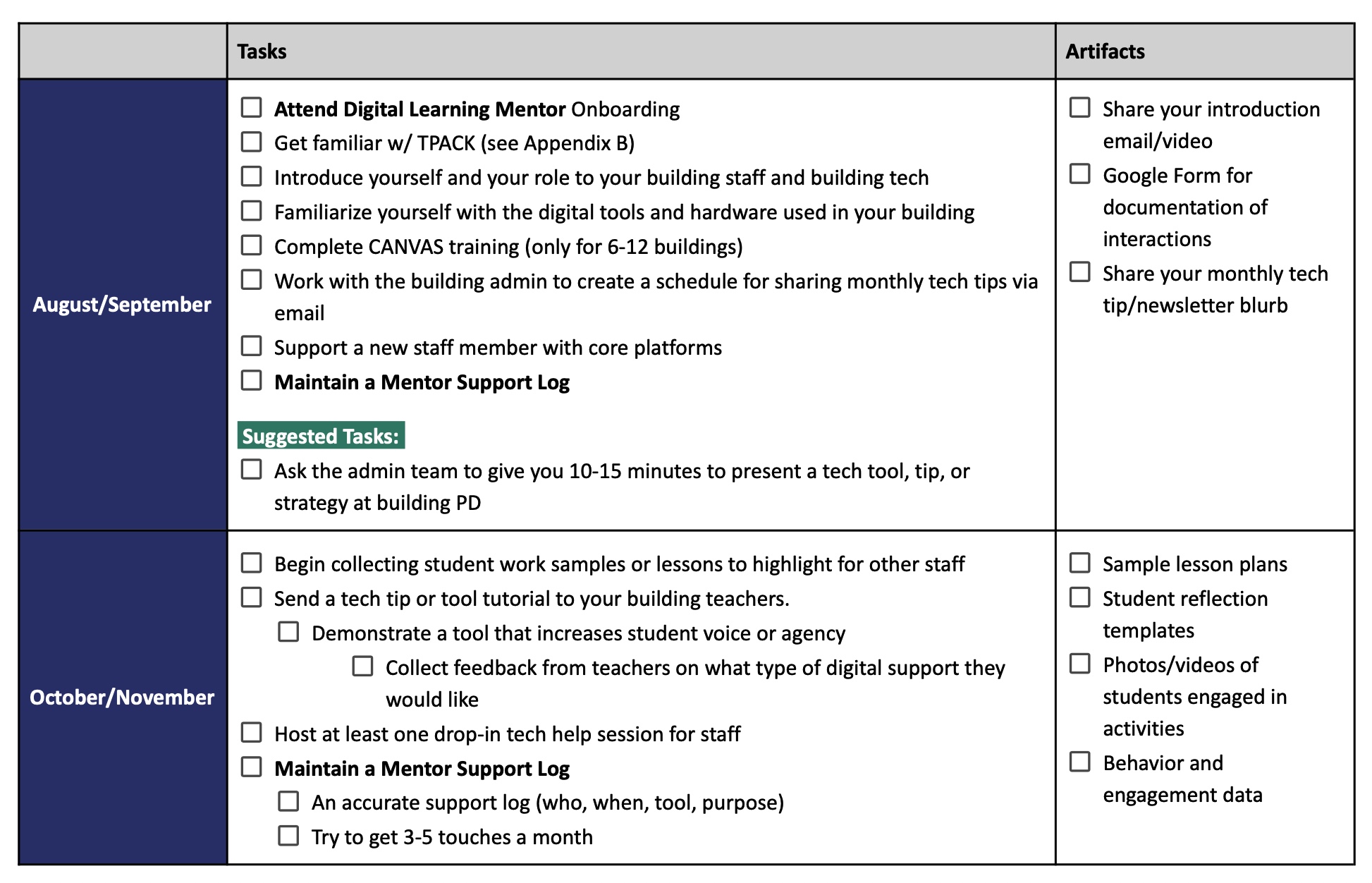
Hightower Herron, S., & Ullah, T. (2026). Tech with Intent: A Digital Mentor Guide.

This research brief addresses a problem of practice in a public school setting that supports the integration of instructional tools into K-12 classrooms, specifically the district’s limited technology integration support. To solve this challenge, this brief outlines goals, objectives, and an actionable year
long guide for building capacity for digital mentors to consistently support teachers in integrating technology into instruction. The brief provides the guide with a grounding in research that supports high norms of professional learning community practices and the implementation of Technological Pedagogical Content Knowledge (TPACK) to the participants in this work. The research brief frames how
the guide addresses role expectations, support structures, resources, instructional intents, and accountability measures for the 2026-2027 school year.

Centering Learning with Technology Co-Design Protocol

Anders, A., & D’ Angelo, C. (2026). Centering Learning with Technology Co-Design Protocol.

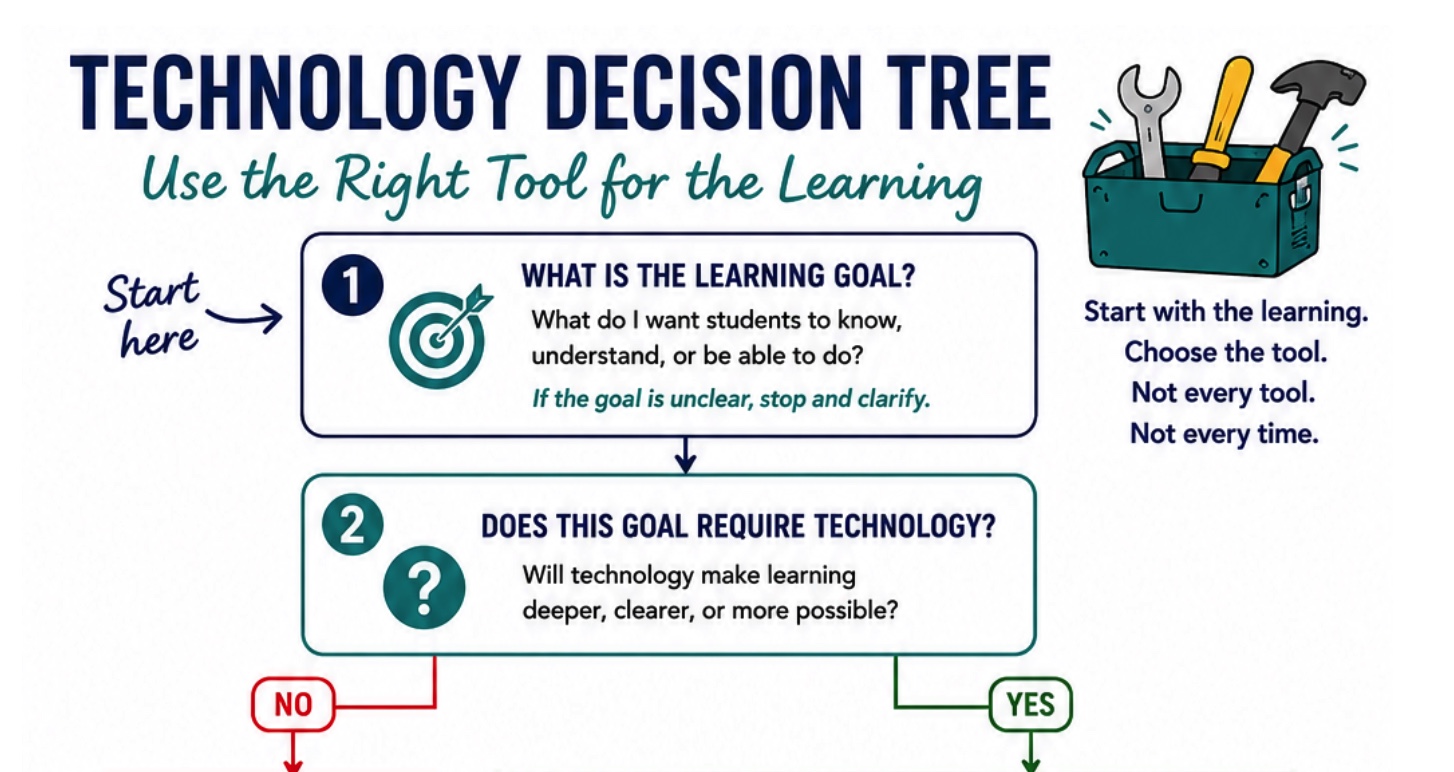
When students use technology without understanding why, they are following directions. When they can explain how a specific tool helps them solve a specific problem, they are doing something fundamentally different. Most people don’t walk into a garage, pick up a hammer, and ask, “What can I hit?” Instead,
most people start with a project. They think about what they are trying to build, fix, or create, and then they choose the right tool for the job.

Teachers can begin to integrate technology more thoughtfully into their instruction through a simple but important shift in thinking: Center with the learning, not the tool.

Educational AI Implementation Guidelines

Mays, M., & Harper, A. (2026). Educational AI Implementation Guidelines.

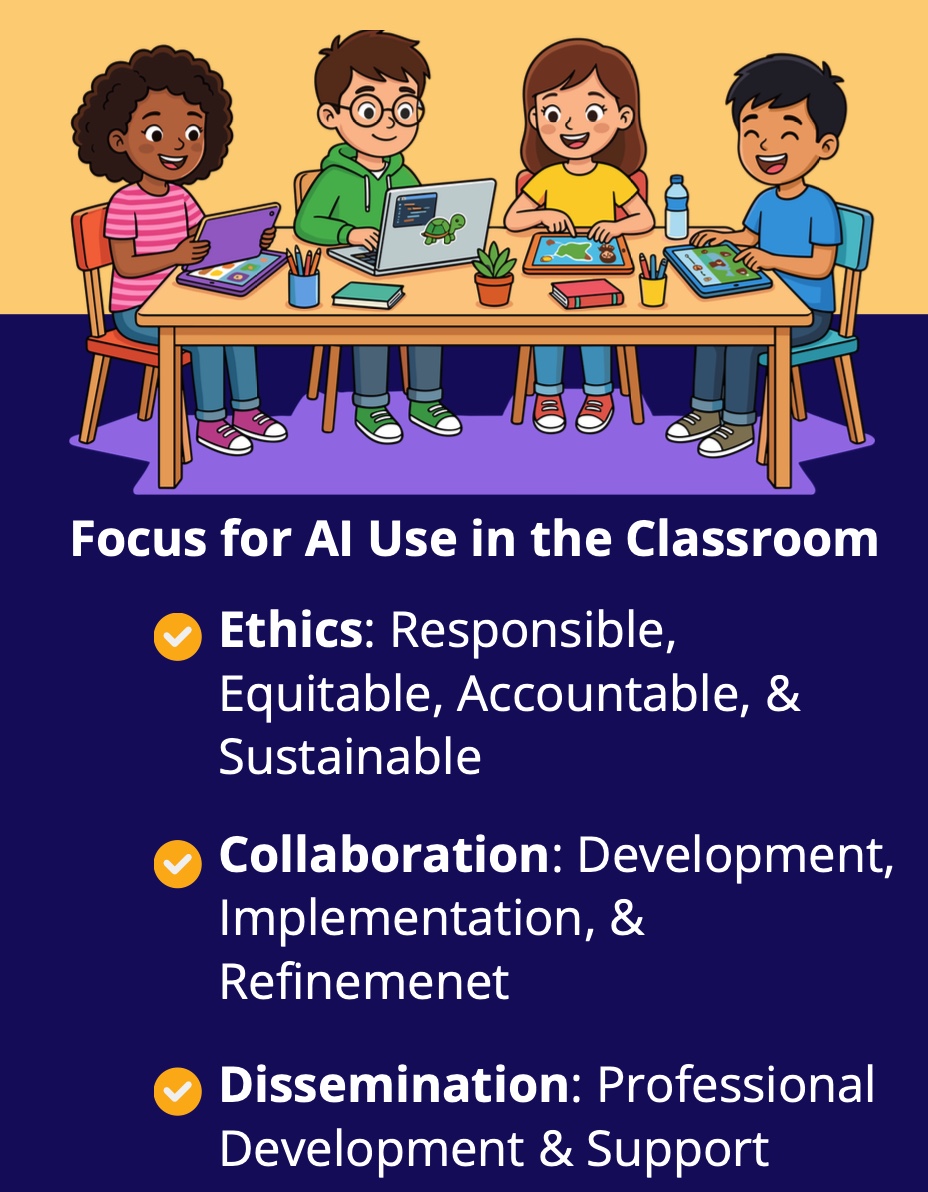
As the AI landscape continues to expand, schools are developing policies and procedures to ensure learning environments and their stakeholders (i.e., Leaders, teachers, instructional coaches, parents, and students) are adequately prepared for the future. In doing so, schools need to be equipped with strategies and resources to support the ethical use of AI tools. In this way, this research practice brief provides structured guidelines to assist teachers in implementing AI tools in the classroom. Overall, these guidelines have been developed to promote an inclusive and adaptable learning environment for students (Lee & Kwon, 2024; Gu & Ericson, 2025).

Beyond AI Adoption: Building an AI Instructional Ecosystem Through Instructional Coaching

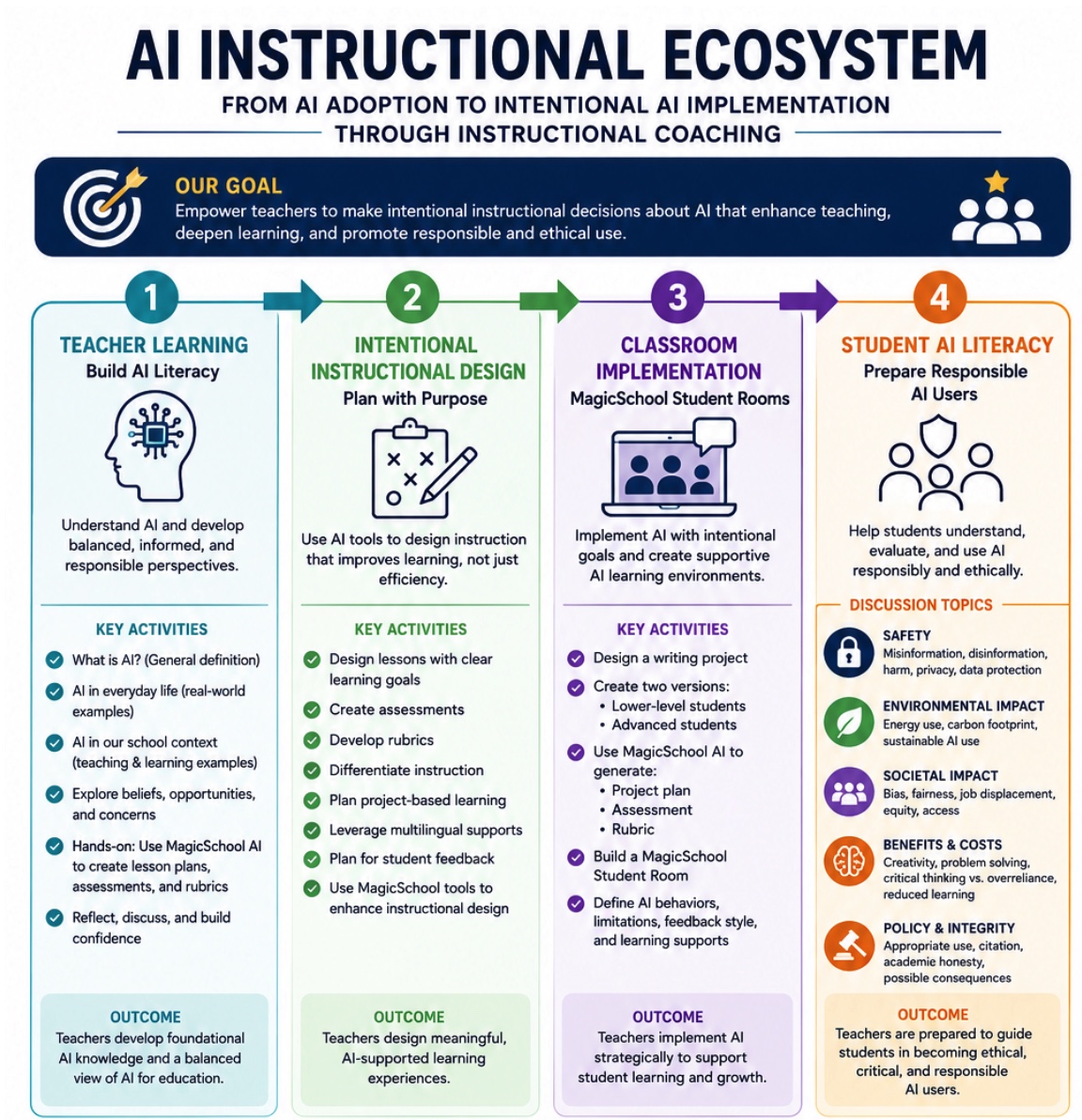
Sadik, O., & De Los Reyes, J. (2026). Beyond AI Adoption: Building an AI Instructional Ecosystem Through Instructional Coaching.

This Research Practice Brief presents the AI Instructional Ecosystem, a coaching-supported professional learning framework designed to move schools from AI adoption toward intentional AI
implementation. Rather than centering technology, the framework positions instructional coaching as the mechanism through which teachers develop AI literacy, design meaningful AI-supported instruction, implement AI purposefully, and cultivate responsible AI literacy among students.

The framework is intentionally adaptable to future technologies because it emphasizes instructional
principles rather than specific AI platforms.

NSF logo

This material is supported by National Science Foundation awards #2300618 and #2300619. Any opinions, findings, conclusions, or recommendations are those of the authors and do not necessarily reflect the views of NSF.

Contact Us