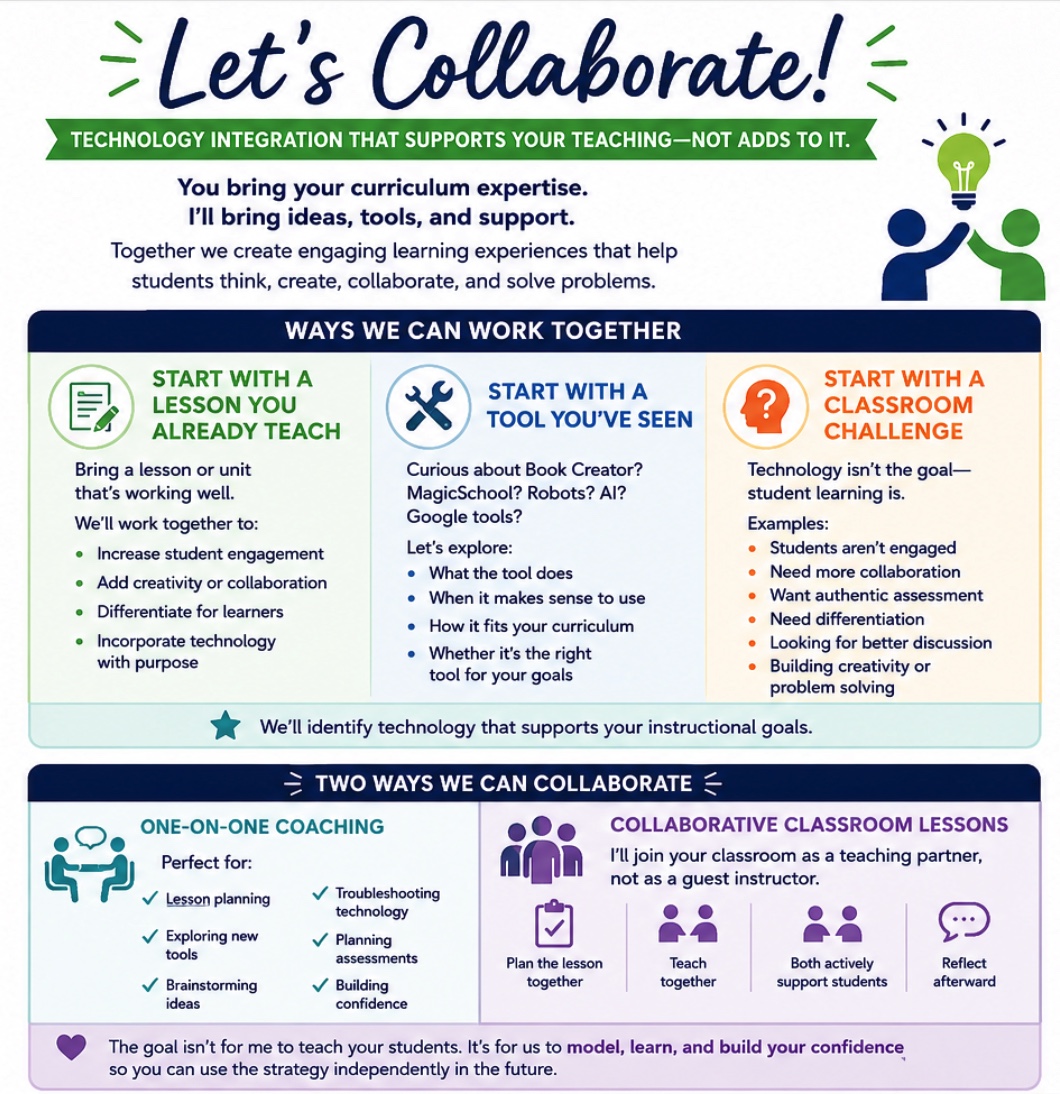

Teacher Brief: Collaborating for Effective Technology Integration

Lescault, T. & Codding, D. (2026). Collaborating for Effective Technology Integration.

Technology integration is most effective when it is purposeful, collaborative, and connected to student learning goals. Collaboration between teachers and instructional technology specialists, coaches, librarians, curriculum leaders, and colleagues can help educators identify meaningful ways to use technology that enhance learning rather than simply adding another tool to the classroom. This brief aims to achieve the following:

  • Clarify the purpose of technology-integration collaborations.
  • Address common misconceptions.
  • Provide actionable steps for teachers.
  • Highlight benefits for students.
  • Support teachers in growing toward independent, confident technology integration.
Scaffolding Engagement for All Learners in Project-Based Learning

McGuinness, K., & Rutherford, T. (2025). Scaffolding Engagement for All Learners in Project-Based Learning.

Project-Based Learning (PjBL) has been part of the educational
landscape for many years and teachers are motivated to include PjBL in their classrooms for its benefits on student motivation, engagement and learning. However, PjBL can be challenging to define, difficult to implement, and time-consuming. In addition, PjBL may come in conflict with
meeting other learning goals and with addressing needs of special populations, such as English Language Learners.

In order to better support teachers in implementing evidence-based practices, such as PjBL, coaches can provide guidance for teachers by illustrating the components and structure of
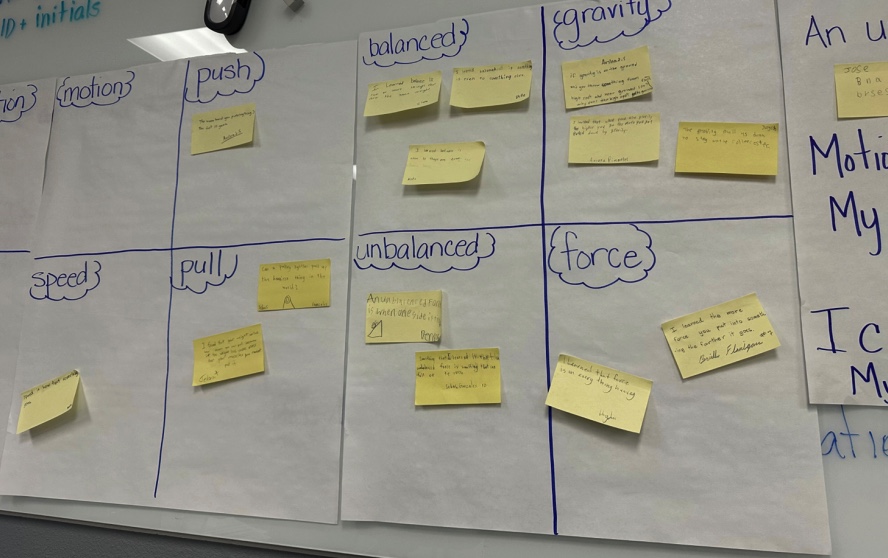
PjBL within the context of required content and English language proficiency standards. One such illustration is provided by this Research Brief, in the context of a fifth grade unit on Force and Motion.

This Brief is framed with the characteristics of PjBL as defined by Krajcik and Bloomenfeld and with the Arizona State Science Standards (AZ Science Standards, 2018), which have comparable elements to the Next Generation Science Standards. In addition, we
also rely on the Arizona English Language Proficiency (ELP) Standards (Arizona English Language Proficiency Standards 2019), which are intended to support English speaking, listening, reading, and writing skills of students who are English Language Learners.

NSF logo

This material is supported by National Science Foundation awards #2300618 and #2300619. Any opinions, findings, conclusions, or recommendations are those of the authors and do not necessarily reflect the views of NSF.

Contact Us